Main Courses
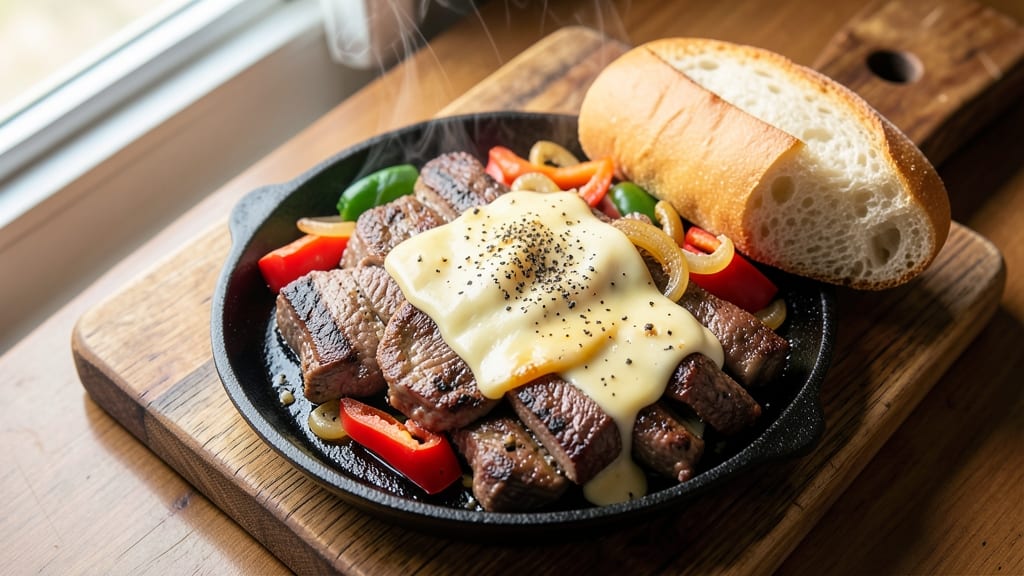
This Philly cheese steak Blackstone recipe transforms a classic sandwich into a smoky, crispy masterpiece with rivers of melted cheese—all achieved on a single griddle.
The secret lies in perfecting the sear on ribeye steak while maintaining juicy tenderness, then sandwiching it between toasted bread and gooey cheese until it melts into golden rivers. After years of testing, this method delivers restaurant-quality results with minimal effort, using just a Blackstone and a few key ingredients.
The beauty of this recipe is its simplicity: no fancy equipment beyond a well-seasoned griddle, and no complicated techniques—just precise heat control and timing. You'll start with a well-seasoned ribeye steak, cooked to medium-rare perfection on the Blackstone before slicing it thinly against the grain.
Then comes the magic—layering it with melted provolone and American cheese, toasting the bread until it's crispy on the edges while keeping the inside soft.
What you end up with is a Philly cheese steak that's crispy on the outside, juicy on the inside, and oozing with melted cheese in every bite. The smoky flavor from the Blackstone griddle adds depth that you won't find in traditional versions, making this the ultimate comfort food experience.
Whether you're feeding a crowd or treating yourself to a solo meal, this recipe delivers every time.
Optional toppings like sautéed peppers and onions or a drizzle of garlic butter sauce can elevate it further, but the core technique remains foolproof. Ready to master this Blackstone classic? Let's get started with the ingredients and step-by-step instructions.
Ingredients for philly cheese steak blackstone
Four essential ingredients transform a simple sandwich into Blackstone magic.
| Ingredient | Amount | Notes |
|---|---|---|
| Ribeye Steak 🥩 | 1 ½ lb | Thinly sliced against grain |
| Provolone Cheese 🧀 | 8 oz | Sliced into 1/4-inch pieces |
| American Cheese 🧀 | 8 oz | Thinly sliced for melting |
| Hoagie Rolls 🍞 | 4 whole | Crusty, unsliced rolls |
| Yellow Onion 🧅 | 1 whole | Thinly sliced for optional topping |
| Green Bell Pepper 🌶️ | 1 whole | Thinly sliced for optional topping |
| Butter 🧈 | 4 tbsp | Unsalted, for griddle seasoning |
| Vegetable Oil 🫒 | 2 tbsp | For Blackstone preheating |
| Garlic Powder 🧄 | 1 tsp | For seasoning steak |
| Black Pepper 🌶️ | 1 tsp | Freshly ground for seasoning |
| Salt 🧂 | 1 ½ tsp | Kosher salt for seasoning |
| Mayonnaise 🥛 | 2 tbsp | Optional for optional sauce |
The ribeye steak is non-negotiable—its marbling ensures juicy tenderness while searing on the Blackstone. Look for cuts with visible fat streaks; Costco or Whole Foods carry excellent options. Slice it thinly against the grain for maximum tenderness. The provolone and American cheese should be high-quality; Kraft singles work for American, but provolone should be a branded wedge for authentic melt. Hoagie rolls from a bakery stay fresh longer than store-bought—check the deli section for crusty options. Optional toppings like onions and peppers should be fresh, not canned.
No ribeye? Flat iron steak is a solid substitute, though slightly leaner. Short on provolone? Muenster cheese melts well, though it lacks provolone's sharpness. For a vegetarian twist, portobello mushrooms marinated in balsamic work surprisingly well. The garlic powder and black pepper should be freshly ground—pre-ground spices lose potency quickly. If you prefer a sauce, mayonnaise mixed with a dash of hot sauce mimics classic Philly cheese steak sauces. Always toast the rolls directly on the Blackstone for maximum crispiness.
Store sliced steak in an airtight container with parchment paper between layers for up to 2 days. Cheese can be pre-sliced and refrigerated for 1 week, though it's best used fresh. Rolls stay fresh 3 days when wrapped in a towel. The Blackstone should be preheated to 375°F—use an infrared thermometer for precision. Leftovers reheat beautifully on the griddle for 2-3 minutes per side.
Why You'll Love This Recipe
- One-Pan Magic: I swear by this recipe because it’s all on the Blackstone—no chopping boards, no extra pans. Just sear the ribeye, caramelize the onions, melt the cheeses right over the heat, and slap it in a hoagie. Cleanup? Three minutes. (Yes, even on a Tuesday night.)
- Melty, Meaty Bliss: That combo of provolone and American? Chef’s kiss. The provolone adds that sharp, salty punch while the American stretches into gooey perfection. Slice the ribeye thick, and you get juicy bites with every cheesy pull—no dry, sad sandwiches here.
- Tailgate or Tailgate: Between us, this is my go-to for game days, but it’s just as happy at a backyard BBQ or packed in a cooler for a picnic. The rolls stay soft, the steak stays warm, and no one will guess it took less than 20 minutes to throw together. (My daughter picks out the onions, but still asks for seconds.)
- Budget-Friendly Feast: Ribeye isn’t cheap, but you’re using the whole cut—no scraps, no waste. Buy a bigger steak, slice it thin, and suddenly you’ve got leftovers that taste even better the next day. Plus, hoagie rolls and cheese stretch further than you’d think. (Not the prettiest, but the taste makes up for it.)
Step-by-step instructions for Philly cheese steak Blackstone recipe
Here's how to create restaurant-quality Philly cheesesteaks with a perfect smoky griddle crust.
Season and Prep the Ribeye Steak
Begin by slicing the 1.5 lb ribeye steak thinly against the grain using a sharp knife. This ensures tender bites that won't be chewy. In a small bowl, combine the 1.5 tsp salt, 1 tsp black pepper, and 1 tsp garlic powder. Rub this seasoning mixture evenly over both sides of all steak slices. Let them sit at room temperature for 15 minutes before cooking - this ensures even cooking throughout each slice.
While the steak seasons, prepare your toppings by thinly slicing the 1 whole yellow onion and 1 whole green bell pepper. These will add freshness to balance the rich cheeses. Keep them separate until you're ready to assemble each sandwich.
Preheat and Season the Blackstone Griddle
Place the Blackstone griddle on your outdoor grill or stovetop burner and preheat it to medium-high heat for 10 minutes. This is crucial for developing that signature smoky crust. Once hot, add the 2 tbsp vegetable oil and spread it evenly across the entire surface using a paper towel. Then melt the 4 tbsp butter over the oil, letting it sizzle and coat the griddle completely. This butter-oil combination creates the perfect foundation for that crispy crust.
Watch for small bubbles forming on the surface - this indicates the griddle is ready for cooking. The combination of butter and oil will give your steaks that rich, caramelized crust while keeping them juicy inside.
Cook the Steak to Perfect Doneness
Working in batches to avoid overcrowding, place the seasoned steak slices directly on the preheated griddle. Cook for 2-3 minutes per side until they develop deep brown crusts and reach medium-rare doneness (130-135°F internal temperature). The edges should be slightly charred while the centers remain tender. Don't press down on the steak with a spatula - this squeezes out juices. Instead, let the steak cook undisturbed until you see those beautiful crust lines forming.
As each batch cooks, transfer the steak slices to a clean plate and tent loosely with aluminum foil to keep them warm. The residual heat will continue cooking them slightly while you prepare the next batches.
Assemble the Cheese Steaks
Slice each of the 4 whole hoagie rolls in half lengthwise and lightly toast them on the griddle for 30 seconds per side until golden brown. This adds texture that complements the soft steak and melted cheese. On the bottom half of each roll, layer half of the cooked steak slices, then sprinkle half of the 8 oz American cheese and half of the 8 oz provolone cheese slices evenly over the steak. Top with the remaining steak slices and remaining cheese.
Place the top half of each roll on the cheese and press down gently but firmly. The cheese should begin melting immediately from the residual heat of the griddle. If you prefer, you can add the optional sliced yellow onion and green bell pepper at this stage - they'll soften slightly from the heat of the cheese.
Melt the Cheese and Serve
Return the assembled sandwiches to the griddle, cover with a lid, and cook for 1-2 minutes until the cheese is completely melted and bubbling at the edges. You'll see those beautiful cheese rivers forming - this is what makes a great Philly cheesesteak. The cheese should be fully melted but still slightly gooey in the center when you cut into it. Remove from the griddle and let rest for 1 minute before serving.
For an optional sauce, mix the 2 tbsp mayonnaise with a pinch of salt and serve on the side for dipping. Cut each sandwich diagonally and serve immediately while the cheese is still warm and gooey. The combination of the smoky griddle crust, tender steak, and melted cheese creates a perfect balance of textures in every bite.
Pro Tips For Making Philly Cheese Steak Blackstone
- Sear Steak First: Hit the ribeye with a screaming-hot Blackstone for 2-3 minutes per side before adding onions—this locks in juices and builds flavor. I used to toss it in cold; now my steak stays tender even with that gooey cheese on top.
- Slice Onions Thin: Cut the yellow onion into 1/8-inch slices (yes, measure it) so they caramelize fast and don’t turn mushy under the cheese. Thick strips just sit there like sad, watery walls.
- Cheese Stack High: Layer provolone and American cheese before closing the lid—American on bottom (it melts faster) and provolone on top (it stretches better). Skip the "just sprinkle" approach; you want a molten cheese avalanche, not a sad drizzle.
- Rest Before Slicing: Let the assembled sandwich sit covered for 3-5 minutes after cooking—this lets the cheese fully bind and the steak reabsorb juices. I know you’re hungry, but cutting into it too soon means greasy, uneven bites.
Essential equipment for perfect results
Blackstone Griddle
The heart of this recipe is your Blackstone griddle, and I can't stress enough how important it is to have it in good condition. A well-seasoned griddle creates that signature smoky crust that elevates your Philly cheese steak from good to restaurant-quality.
I recommend using a 12-inch or 14-inch griddle—it gives you enough space to cook steak batches without overcrowding. If you're new to Blackstone cooking, invest in a griddle scraper and heat-resistant silicone spatula to maintain your griddle's seasoning. 🔥
Meat Thermometer
Precision is key when cooking steak to medium-rare, and that's where a meat thermometer comes in. I use a ThermoWorks Smoke thermometer because it's durable and gives instant readings.
Insert the probe into the thickest part of the steak to ensure it reaches 130-135°F—this is the sweet spot for tender, juicy ribeye. Without a thermometer, you risk overcooking or undercooking, which can ruin the texture of your sandwich.
Sharp Knife and Cutting Board
A sharp chef's knife and a sturdy cutting board are essential for slicing the ribeye against the grain. I recommend a Wüsthof or Victorinox knife—they hold their edge well and make quick work of thin slicing.
A wooden or plastic cutting board prevents the knife from dulling, and it's safer than glass or metal. Slicing against the grain ensures each bite is tender, not chewy, which is crucial for a great Philly cheese steak.
Tongs or Spatula
You’ll need heat-resistant tongs or a stainless steel spatula to handle the steak and assemble the sandwiches without tearing the bread. I prefer OXO Good Grips tongs because they’re easy to grip and won’t slip.
Avoid flimsy spatulas—they can bend or scratch your Blackstone. When assembling, use the tongs to flip the sandwiches gently to avoid crushing the rolls or spilling the cheese. 💪
Butter and Oil
The butter and vegetable oil combo is non-negotiable for that rich, caramelized crust. Use unsalted butter (like Plugrá) to control seasoning, and high-smoke-point oil (like avocado or grapeseed oil) to prevent burning.
Melt the butter over the oil on the griddle—this creates a flavorful, crispy base for the steak. If you’re short on butter, a mix of olive oil and butter works, but avoid 100% olive oil, as it can burn at high heat.
Optional: Sauce Supplies
If you're making the optional mayonnaise sauce, grab a small bowl and a whisk for mixing. For extra flavor, add a pinch of hot sauce (like Frank’s RedHot) or Worcestershire sauce.
A pastry brush can also help spread any leftover butter or oil on the griddle for extra crispiness. Keep these tools handy—small touches like sauce can take your Philly cheese steak from great to unforgettable. 🌟
Nutrition facts
Frequently asked questions
Can I use a different type of steak besides ribeye?
Yes! While ribeye is ideal for its marbling, flat iron steak or sirloin work well too. For leaner cuts like sirloin, cook them 1-2 minutes less per side to prevent dryness. Avoid tougher cuts like flank steak—they won't slice as tenderly for sandwiches.
How do I keep the bread from getting soggy?
Toast the rolls directly on the Blackstone for 30 seconds per side before assembling. The residual heat from the griddle will keep them crispy even after adding cheese. For extra insurance, place the sandwiches on a wire rack over a baking sheet while melting the cheese.
What if my cheese isn't melting properly?
Low-quality cheese or underheated griddle are usually the culprits. Use high-melt cheese like provolone or Kraft singles for American. If the griddle isn't hot enough, increase heat to medium-high and cover with the lid to trap steam. Never microwave cheese—it creates a rubbery texture.
Can I make this recipe indoors on a stovetop griddle?
Use a cast iron skillet or electric griddle set to medium-high heat. The same butter-oil combo works, but you may need to adjust cooking times slightly. For best results, preheat your cookware for 10 minutes to mimic the Blackstone's heat retention.
How do I store leftovers?
Let sandwiches cool completely, then wrap tightly in aluminum foil or place in an airtight container. Reheat on the Blackstone for 2-3 minutes per side until cheese melts. Leftovers keep for 3 days in the fridge. For longer storage, freeze components separately: steak (up to 3 months), cheese (up to 1 month), and bread (up to 1 week).