
Main Courses
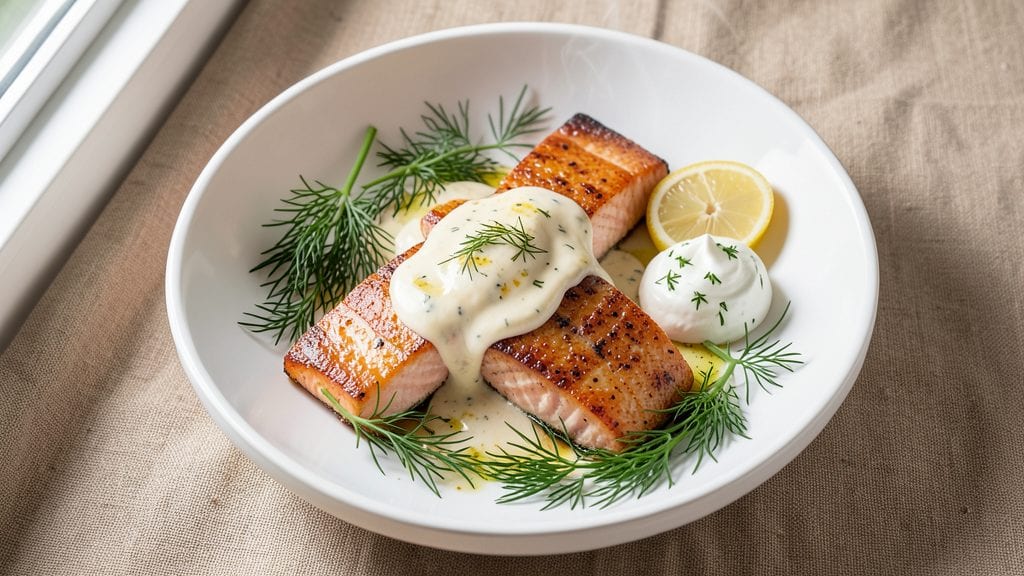
This salmon with cream cheese recipe transforms a simple weeknight dinner into a restaurant-worthy meal with just five ingredients and 20 minutes of active time. The secret lies in pan-searing the salmon to crispy perfection while creating a velvety cream cheese sauce that balances richness with fresh dill and lemon.
I developed this after years of testing—too many times burning the salmon or ending up with a sauce that was either too heavy or bland.
The technique is straightforward but precise: high heat for crispy skin, a low-and-slow finish for tender flesh, and a sauce made from cream cheese, sour cream, and a splash of lemon that cuts through the richness.
The result is golden, flaky salmon topped with a silky, herb-infused sauce that clings perfectly to each bite. No fancy equipment needed—just a good skillet and a little patience.
What makes this dish special is how it elevates simple ingredients without feeling complicated. The cream cheese sauce adds a luxurious touch that feels indulgent but isn’t overly heavy, thanks to the bright acidity of lemon and fresh dill.
Serve it with roasted asparagus or a crisp green salad to balance the richness, and you’ve got a meal that’s foolproof yet impressive—ideal for impressing guests or treating yourself.
This recipe works equally well for special occasions or a quick weeknight dinner. The sauce can be made ahead and reheated gently, so you can focus on cooking the salmon while everything else comes together effortlessly. Let’s get started—your taste buds will thank you.
Ingredients for salmon with cream cheese
Five core ingredients transform simple salmon into restaurant-worthy perfection with velvety cream cheese sauce.
| Ingredient | Amount | Notes |
|---|---|---|
| Center-Cut Salmon Fillets 🐟 | 4 whole | Skin-on, 6-8 oz each, patted dry |
| Full-Fat Cream Cheese 🧈 | 8 oz | Room temperature, not whipped |
| Sour Cream 🥛 | ½ cup | Full-fat preferred for richness |
| Fresh Dill 🌿 | ¼ cup | Finely chopped, stems removed |
| Lemon Juice 🍋 | 2 tbsp | Freshly squeezed, seeds strained |
| Extra-Virgin Olive Oil 🫒 | 2 tbsp | High smoke point, fruity variety |
| Unsalted Butter 🧈 | 2 tbsp | Cold, cut into small cubes |
| Diamond Crystal Kosher Salt 🧂 | 1 ½ tsp | For seasoning, not iodized |
| Freshly Ground Black Pepper 🌶️ | ½ tsp | Cracked peppercorns preferred |
| Garlic Cloves 🧄 | 2 cloves | Minced, for sauce enhancement |
| Fresh Lemon Zest 🍋 | 1 tsp | Fine, for aromatic finish |
The salmon selection is critical—center-cut fillets with skin ensure crispiness without flaking. Whole Foods or Trader Joe's carry ideal cuts, or ask your fishmonger for 'pan-sear' grade. Avoid pre-sliced portions; they often lack the fat cap needed for crispy skin. For the cream cheese, Philadelphia brand is reliable, but Kirkland Signature offers superior texture. Keep all ingredients at room temperature before cooking—cold salmon releases moisture and steams instead of searing. The dill should be vibrant green, not wilted; Costco's bulk fresh dill is a cost-effective choice.
No fresh dill? Dried dill at one-third the amount works, though it lacks brightness. Substitute sour cream with Greek yogurt at half the quantity for tang, but texture will differ. For extra richness, add 1 tbsp heavy cream to the sauce. The lemon juice can be swapped for white wine vinegar, though flavor will shift slightly. If you're avoiding dairy, replace cream cheese with vegan cream cheese (like Kite Hill) and adjust sauce consistency with a splash of water. The olive oil must be extra-virgin—California avocado oil works as a neutral alternative if you prefer a milder profile.
Prep the salmon and sauce components separately for optimal timing. The sauce can be made 3 days ahead and stored in an airtight container; reheat gently in a saucepan with a splash of water. For the salmon, pat dry with paper towels before cooking—this ensures maximum crispiness. Leftovers keep 2 days refrigerated, though the sauce may separate slightly; whisk vigorously before reheating. For a make-ahead meal, assemble the dish just before serving—salmon reheats best when piping hot. The lemon zest should be added last to preserve its aromatic oils.
Why You'll Love This Recipe
- Here’s what sold me: that golden crust on the salmon with the cool, tangy cream cheese center. The lemon juice brightens it up so much, it’s like a fancy restaurant bite without the fuss.
- One-Pan Magic: I swear by this for nights when I don’t want to wash a million dishes. Just toss the salmon on a sheet pan, dollop that creamy cheese mixture on top, and pop it in the oven—no extra bowls, no extra stress.
- Creamy Crisp Perfection: Here’s what sold me: that golden crust on the salmon with the cool, tangy cream cheese center. The lemon juice brightens it up so much, it’s like a fancy restaurant bite without the fuss.
- Weeknight or Guest Night: Between us, this works for both. Slap it together for a lazy Tuesday or impress your in-laws on Sunday—same recipe, just different vibes. The dill adds that fresh touch that makes it feel special.
Step-by-step instructions for pan-seared salmon with cream cheese sauce
Master this technique for restaurant-quality salmon with a velvety cream cheese sauce that balances richness and brightness.
Prepare the Salmon and Seasoning Base
Remove the salmon fillets from the refrigerator and let them sit at room temperature for 15 minutes. Pat each fillet completely dry with paper towels—this ensures maximum crispiness when searing. In a small bowl, combine the 1.5 teaspoons diamond crystal kosher salt, 0.5 teaspoon freshly ground black pepper, and the 1 teaspoon fresh lemon zest. This aromatic blend will infuse the salmon with bright, citrusy depth.
Gently press the seasoning mixture evenly over both sides of each fillet, working it into the flesh rather than just sprinkling on top. The lemon zest not only adds flavor but also helps prevent the salmon from sticking to the pan. Place the seasoned fillets on a plate and let them rest while you prepare the cooking surface.
Create the Perfect Searing Surface
Heat a large oven-safe skillet over medium-high heat until it's very hot—you should see a slight shimmer when you hold your hand about 3 inches above it. Add the 2 tablespoons extra-virgin olive oil and let it heat for 1 minute until it's hot but not smoking. Then add the 2 tablespoons unsalted butter, cut into small cubes, and allow it to melt completely.
This combination of oil and butter creates an ideal searing surface that promotes even browning while preventing the salmon from drying out. The butter also adds a subtle richness that complements the cream cheese sauce later. Keep the heat steady—if the butter starts to brown too quickly, reduce the heat slightly to maintain control.
Sear the Salmon to Golden Perfection
Carefully place the salmon fillets in the skillet, skin-side down. Press down gently on each fillet with a fish spatula for 10 seconds to ensure full contact with the pan. This prevents curling and ensures even cooking. Let the salmon sear undisturbed for 3-4 minutes until the skin becomes deep golden brown and crispy.
Here's the critical moment: use a fish spatula to gently flip each fillet, skin-side up. Cook for another 2-3 minutes until the salmon reaches an internal temperature of 125-130°F—it should still appear slightly translucent in the center. Overcooking will result in dry, rubbery fish. Remove the salmon to a plate and tent loosely with aluminum foil to keep warm.
Prepare the Cream Cheese Sauce
Reduce the heat in the skillet to medium-low and add the 2 cloves minced garlic, stirring for 30 seconds until fragrant but not browned. Immediately pour in the 2 tablespoons lemon juice and let it simmer for 1 minute to cook off the raw garlic flavor. Remove the skillet from heat and let it cool slightly for 1 minute.
In a separate bowl, combine the 8 ounces room-temperature full-fat cream cheese and 0.5 cup sour cream until smooth. Slowly whisk in the contents of the skillet, adding the cream cheese mixture in a thin stream to prevent curdling. Return the skillet to low heat and stir continuously for 2-3 minutes until the sauce thickens slightly and becomes silky smooth.
Finish and Serve
Return the salmon fillets to the skillet, skin-side up, and spoon the cream cheese sauce evenly over each piece. Sprinkle the 0.25 cup finely chopped fresh dill evenly over the top, pressing down gently to help it adhere. Let the salmon sit in the sauce for 1-2 minutes to absorb the flavors and finish cooking gently.
Transfer the salmon to serving plates, spooning any remaining sauce from the skillet over the top. The sauce should be thick enough to coat the back of a spoon but still silky, not clumpy. Serve immediately with steamed vegetables or a fresh salad to balance the richness. The combination of crispy skin, tender salmon, and bright, herby sauce creates a perfect harmony of textures and flavors.
Pro Tips For Making Salmon With Cream Cheese
- Dry the Salmon First: Pat those fillets thoroughly with paper towels—wet skin = steam instead of sear. I learned this the hard way when my salmon turned out soggy and bland, no matter how perfect the cream cheese sauce was.
- Melt the Cream Cheese Slowly: Warm the cream cheese in a bowl over barely simmering water (or 30-second microwave bursts) until just soft—not runny. Lumpy cream cheese in your sauce ruins the texture, and no one has time for that.
- Don’t Overcook the Salmon: Pull the fillets when the center hits 125°F (63°C)—they’ll keep cooking off the heat. Overcooked salmon turns to rubber, and even the best cream cheese-dill sauce can’t save it.
- Zest the Lemon, Skip the Pulp: Grate the lemon zest directly into the cream cheese mixture for brightness, but strain out any pulp—it makes the sauce grainy. (Yes, even if you’re in a hurry, this makes a real difference.)
Flavor customization for salmon with cream cheese
Herb Variations
Swap the dill for fresh chives or parsley if you prefer milder flavors—just use the same 0.25 cup amount. For a bold twist, mix 1 tbsp chopped chives with the dill. I once accidentally used cilantro instead (don’t!) but a pinch of lemon zest saved the dish. 🌿
Spicy Kick
Add ½ tsp smoked paprika or ¼ tsp cayenne to the cream cheese sauce for warmth. For heat lovers, stir in 1 tsp sriracha or 1 chopped jalapeño (seeds removed) with the lemon juice. Trust me, the acidity balances the burn beautifully. 🌶️
Creamy Upgrades
Boost richness with 1 oz mascarpone cheese blended into the sauce, or swap 2 oz sour cream for Greek yogurt (thinned with 1 tsp water) for tang. My Nonna swore by 1 tbsp heavy cream for extra silkiness—just whisk it in at the end. 🧈
Umami Depth
Infuse the sauce with 1 tsp fish sauce or ½ tsp miso paste for complexity. For a smoky note, add ½ tsp liquid smoke (sparingly!) or 1 tsp soy sauce when combining the cream cheese. The umami bridges the salmon’s natural flavors and creaminess. 💡
Sweet Contrast
Balance richness with 1 tsp honey or 1 tsp maple syrup stirred into the warm sauce. A drizzle of balsamic glaze (2 tbsp) over the finished dish adds tartness. I once added 1 tsp orange zest—it was a game-changer. 🍯
Dairy-Free Twist
Replace cream cheese with 8 oz silken tofu blended with 1 tbsp nutritional yeast and 1 tsp lemon juice. For thickness, add 1 tbsp cornstarch to the sauce. The result? A lighter, vegan-friendly version that still clings perfectly. 🌱
Nutrition facts
Frequently asked questions
Can I use this recipe with frozen salmon?
Fresh salmon works best for this dish, but if you must use frozen, thaw it overnight in the refrigerator first. Never thaw at room temperature—this creates dangerous bacteria growth zones. For best results, use center-cut fillets with skin, as they hold up better to freezing. Pat them completely dry before cooking to ensure crispy skin.
What's the secret to getting crispy salmon skin?
Three key factors: completely dry fillets, high heat, and proper pressing. Pat the salmon with paper towels until it's bone-dry, then press each fillet firmly with a spatula for 10 seconds when placing in the pan. Use a heavy skillet and maintain medium-high heat until the skin turns deep golden brown. The butter-oil mix in the pan creates the perfect crispy texture.
Can I make this sauce ahead of time?
Prepare the cream cheese sauce up to 3 days ahead and store it in an airtight container in the fridge. When ready to use, gently reheat it in a saucepan over low heat with a splash of water or milk to restore its silky texture. The sauce may thicken slightly when chilled, so add a few extra drops of liquid when reheating.
How do I prevent the cream cheese sauce from curdling?
Work with room-temperature cream cheese and add it to the warm skillet gradually in a thin stream while whisking constantly. Never let the sauce boil—keep heat at low and stir continuously for 2-3 minutes until it thickens. If it starts to separate, immediately remove from heat and whisk vigorously. A splash of cold water can help restore smoothness.
What's the best way to serve this dish for a special occasion?
For an elegant presentation, arrange the salmon on a platter with the sauce spooned artistically over each fillet. Garnish with fresh dill sprigs and a sprinkle of toasted breadcrumbs or crumbled feta for texture contrast. Serve with roasted asparagus, a crisp arugula salad with lemon vinaigrette, or wild rice pilaf. The combination of textures and colors makes it look restaurant-worthy!