
Appetizers
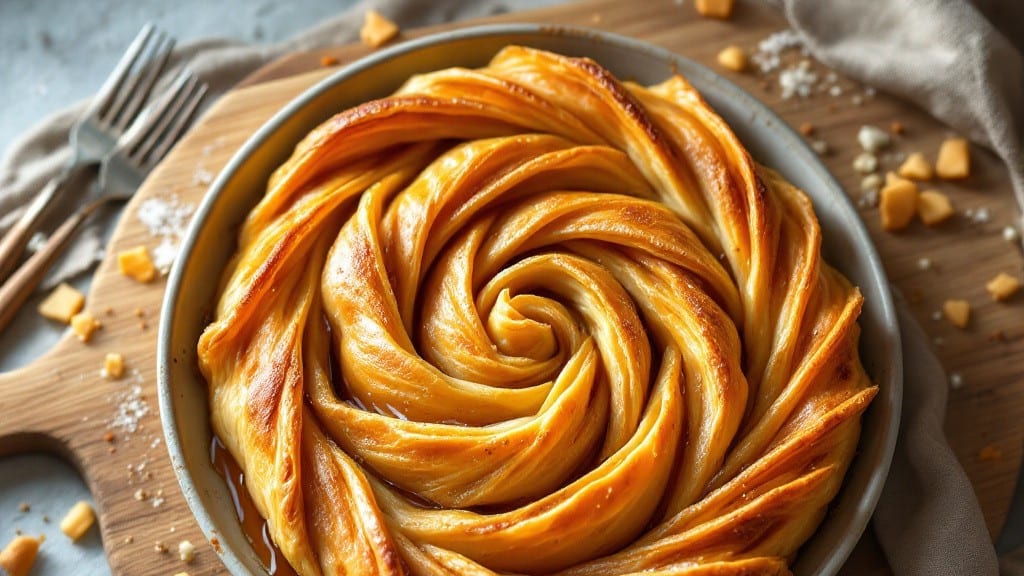
This cheese strudel recipe delivers the perfect balance of flaky, golden layers and a rich, spiced filling that melts in your mouth. The secret lies in the dough—thin, delicate, and rolled to perfection—while the filling combines quark, cheese, and warm vanilla for that signature Austrian flavor.
I've perfected this technique over years of baking, ensuring every bite has that crisp-tender contrast and sweet-tart harmony.
The dough requires patience but rewards with layers so thin they're nearly translucent. You'll need to stretch it carefully, using a bit of flour to prevent tearing, while the filling gets its depth from cinnamon, cardamom, and raisins soaked in rum.
This isn't just dessert—it's an experience that transforms any gathering into something special. The aroma alone will have everyone gathering around your kitchen.
By the time it emerges from the oven, your strudel will have crisp edges that shatter slightly, giving way to tender layers filled with creamy, spiced cheese. Dusting with powdered sugar adds that final touch of elegance, though I often serve it plain to let the natural flavors shine.
This recipe makes enough to impress a crowd while keeping prep manageable—just 30 minutes of active work followed by baking.
Serve warm with vanilla ice cream or a dollop of whipped cream for the full experience. The strudel keeps beautifully at room temperature for several hours, making it perfect for potlucks or holiday celebrations. Here's how to create this classic dessert at home with professional results every time.
Ingredients for cheese strudel
Pantry staples meet Austrian tradition—flaky layers and spiced filling await.
| Ingredient | Amount | Notes |
|---|---|---|
| All-Purpose Flour 🌾 | 4 cups | For dough, sifted before use |
| Unsalted Butter 🧈 | 1 cup | Cold, cubed for dough |
| Large Eggs 🥚 | 4 whole | Room temperature for dough |
| Granulated Sugar 🍚 | ½ cup | For dough sweetness |
| Quark or Cottage Cheese 🧀 | 1 ½ cups | Drained, low-fat preferred |
| Shredded Gouda Cheese 🧀 | 1 ½ cups | Medium or sharp variety |
| Vanilla Extract 💧 | 1 tbsp | Pure, high-quality preferred |
| Ground Cinnamon 🌿 | 1 tsp | Freshly ground preferred |
| Ground Cardamom 🌿 | ½ tsp | Aromatic, not bitter |
| Raisins 🍇 | ¾ cup | Soaked in rum (optional) |
| Dark Rum 🍹 | ¼ cup | For soaking raisins |
| Powdered Sugar 🍚 | ½ cup | For dusting, plus extra |
| All-Purpose Flour 🌾 | ¼ cup | For dusting dough |
| Salt 🧂 | ½ tsp | Fine sea salt |
The dough is where magic happens. All-purpose flour needs to be sifted first—no lumps allowed. For butter, Land O'Lakes or Plugrá work best (the good stuff, not the pre-packaged tub). Keep everything cold until mixing—warm butter makes the dough sticky. Quark can be tricky to find; cottage cheese works in a pinch, but drain it well. The Gouda should be medium or sharp—Kraft or private-label brands are fine, but avoid pre-shredded (it gets gummy). Cardamom is non-negotiable for that authentic flavor—Penzeys or bulk bins at Whole Foods have the best quality.
No rum? Brandy or even orange juice works for the raisins—just soak them for 15 minutes. Short on cardamom? Double the cinnamon, but you'll miss that floral note. The dough needs to rest 30 minutes before rolling (trust me on this)—it makes all the difference. For the filling, soak the raisins overnight if you can; they plump up beautifully. Pre-shredded cheese? Grated yourself—it melts better. And if you're feeling fancy, add a pinch of nutmeg to the filling.
This strudel keeps 3 days at room temperature wrapped tightly in foil. For longer storage, freeze the unrolled strudel (before baking) for up to 3 months. Reheat in a 350°F oven for 15 minutes—it reheats beautifully. I always make two: one for dinner, one to freeze. The aroma alone will have your house smelling like a Viennese café.
Why You'll Love This Recipe
- The secret’s in the layers: buttery, golden puffs with a custardy quark filling that’s almost too good to slice. Honestly, the first bite makes me pause—like when you taste something so balanced it feels unfair.
- No Rolling Required: I swear by this dough trick—just melt butter into flour until it crumbles like sand, then add cold water. No mixer, no fuss, and no risk of overworking the dough. That crispy, flaky magic happens without the stress of rolling it paper-thin.
- Creamy-Crisp Magic: The secret’s in the layers: buttery, golden puffs with a custardy quark filling that’s almost too good to slice. Honestly, the first bite makes me pause—like when you taste something so balanced it feels unfair.
- Weeknight to Holiday: Same recipe, endless uses. Serve it warm with dusted powdered sugar for breakfast, pack slices in lunchboxes, or wow guests with a single pan dessert. My kids even beg for it after school—(yes, even on a Tuesday night).
Step-by-step instructions for cheese strudel
Here's how to create those signature flaky layers with a rich, spiced filling.
Prepare the Raisin Filling
In a medium bowl, combine the 1.5 cups quark or cottage cheese and 1.5 cups shredded Gouda cheese. Mix until smooth, then stir in the 0.5 cup granulated sugar, 1 tbsp vanilla extract, 1 tsp ground cinnamon, and 0.5 tsp ground cardamom. The mixture should be thick but spreadable—this is your base.
In a separate small bowl, pour the 0.25 cup dark rum over the 0.75 cup raisins and let them soak for at least 30 minutes. This step infuses the raisins with deep flavor and prevents them from drying out during baking. Drain any excess rum before adding the raisins to your cheese mixture. Fold them in gently to distribute evenly throughout the filling.
Make the Strudel Dough
In a large bowl, whisk together the 4 cups all-purpose flour and 0.5 tsp salt. Cut in the 1 cup cold, cubed unsalted butter using a pastry cutter or your fingers until the mixture resembles coarse crumbs with pea-sized butter pieces. This texture is crucial for creating flaky layers.
Add the 4 whole large eggs, one at a time, mixing just until combined. The dough should come together but still feel slightly shaggy. Turn it out onto a lightly floured surface and knead gently for about 2 minutes until smooth. Wrap the dough tightly in plastic wrap and refrigerate for 30 minutes to firm up. Cold dough is easier to roll thin and prevents shrinking during baking.
Roll and Fill the Dough
Working on a clean, lightly floured surface, roll the chilled dough into a 12-inch circle, about 1/16-inch thick. I use a rolling pin and keep rotating the dough to maintain even thickness. Dust the dough lightly with 0.25 cup all-purpose flour to prevent sticking as you work.
Spread the cheese filling evenly over the rolled dough, leaving a 1-inch border around the edges. This border helps seal the strudel and prevents filling from leaking out during baking. Fold the edges inward, then roll the dough tightly into a log, starting from one of the long sides. The filling should be completely enclosed when you're done.
Bake to Golden Perfection
Preheat your oven to 375°F. Place the strudel seam-side down on a parchment-lined baking sheet. Bake for 40-45 minutes until the strudel is deep golden brown and the internal temperature reaches 190°F. The edges should be crisp, and the filling should be just set—not runny.
Let the strudel rest for 10 minutes before slicing. This resting period allows the filling to set completely and makes it easier to cut clean slices. Dust generously with 0.5 cup powdered sugar before serving to enhance the vanilla and spice flavors. Serve warm with a dollop of whipped cream or a scoop of vanilla ice cream for the ultimate experience.
Pro Tips For Making Cheese Strudel
- Chill the Dough: Roll out the strudel dough straight from the fridge—it’s the only way to avoid a gummy, sticky mess. I learned this the hard way when my first attempt turned into a chewy disaster; now I keep it cold until the last minute.
- Drain the Quark: Press your quark or cottage cheese through a sieve to remove excess moisture—this keeps the filling from turning soggy. Skip this, and your strudel will steam instead of bake properly.
- Butter the Pan: Coat your baking sheet with melted butter before rolling the dough—it prevents sticking and gives that signature golden crust. I used to skip it, and the edges always tore when I tried to flip.
- Start Low, Finish High: Bake at 350°F (175°C) for the first 20 minutes, then crank to 400°F (200°C) for the last 10—this ensures even browning without burning the edges. Sounds weird, but it works every time.
Essential equipment for perfect results
Dough Rolling Tools
You’ll need a 12-inch rolling pin for even thickness—my go-to is the OXO Good Grips with the textured handle for better control. For ultra-thin layers, I use a French rolling pin (like La Cloche) to achieve that signature translucent look.
If you’re short on space, a rolling pin with a built-in dough scraper (like Jaccard) saves cleanup time. 💫
Butter Cutters
Cold, cubed butter is key—use a sharp chef’s knife or a butter cutter (like Microplane’s 2-in-1) to keep pieces pea-sized for even distribution. I avoid pre-cubed butter from tubs; instead, I buy European-style butter (like Plugrá) and cube it myself for better flavor and texture.
Dough Resting Tools
A dough scraper (like Benriner) helps transfer dough to your work surface without tearing. For resting, I wrap dough in plastic wrap (not foil—it sticks!) and refrigerate on a wire cooling rack to prevent sogginess.
A digital kitchen scale (like OXO Good Grips) ensures precise measurements for the filling ingredients.
Baking Essentials
Preheat your oven with a baking stone (like Lodge Prep & Serve) for even heat distribution. Line your baking sheet with parchment paper (like If You Care) to prevent sticking. A meat thermometer (like ThermoWorks Smoke) ensures the strudel reaches 190°F internally for perfect doneness.
Serving Extras
For dusting, I use a fine-mesh sieve (like Norpro) to apply powdered sugar evenly. A sharp chef’s knife (like Wüsthof) with a serrated edge makes clean slices. For presentation, a wooden serving board (like Utensil House) elevates the dish beautifully. 🍴
Nutrition facts
Frequently asked questions
Can I make cheese strudel without quark?
Quark is traditional, but you can substitute with 1.5 cups of cottage cheese (drained well) or even a mix of 1 cup sour cream and 1 cup ricotta cheese. The texture will be slightly denser, but the flavor remains rich and creamy. Just ensure your substitute is well-drained to avoid a soggy strudel.
Why is my strudel dough tearing when I roll it?
Tearing usually happens when the dough isn't cold enough or isn't rested properly. Always chill the dough for 30 minutes before rolling, and keep your work surface and rolling pin dusted with flour. If it tears, gently patch it with extra dough scraps—no one will notice! Rolling too thin too quickly can also cause tears, so work slowly and rotate the dough often.
Can I prepare the filling ahead of time?
Yes! The filling can be made 1 day in advance and stored in an airtight container in the fridge. The flavors deepen overnight, and the raisins will soak up even more of the rum or juice. Just bring it to room temperature before spreading it on the dough. The dough itself should never be made ahead—it loses its flakiness when refrigerated too long.
What’s the best way to reheat leftover strudel?
For the best results, wrap the cooled strudel in aluminum foil and reheat in a 350°F oven for 10-15 minutes until warmed through. Avoid microwaving—it makes the layers soggy. If you froze the unrolled strudel, thaw it overnight in the fridge before baking as directed. The texture stays crisp-tender when reheated properly.
Can I add other fruits to the filling?
While raisins are classic, try dried apricots, chopped dates, or even fresh apple slices (tossed in lemon juice to prevent browning). For a modern twist, add chopped walnuts or pecans for crunch. Just adjust the liquid in the filling—dried fruits need soaking, while fresh fruits may require a splash of rum or citrus to balance the sweetness.