Desserts
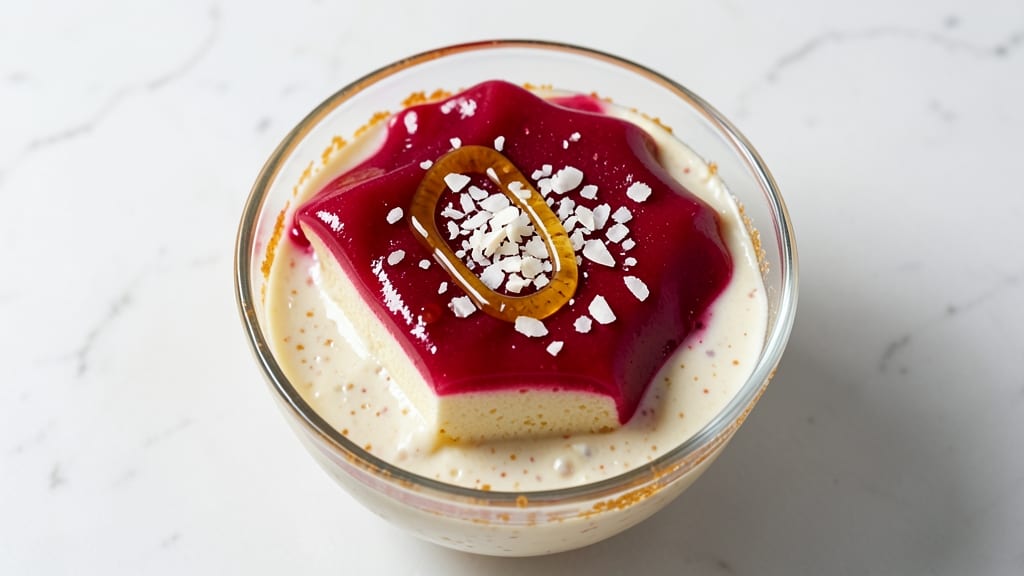
Creating a cottage cheese jello cheesecake pudding transforms simple ingredients into a dessert that delivers three distinct textures in every bite—creamy, jiggly, and velvety.
This no-bake recipe combines the tang of cottage cheese with the wobble of gelatin and the richness of cheesecake layers, all without requiring an oven. The secret lies in balancing flavors and textures through precise layering and chilling times that ensure each component sets perfectly.
What sets this dessert apart is its versatility—you can blend all elements into a single silky pudding or create distinct layers for visual appeal. The cottage cheese adds a subtle tang that brightens the sweetness, while the gelatin creates that signature wobble that makes it irresistible.
With just 15 minutes of active prep and 4 hours of chilling, you’ll have a dessert that looks impressive yet requires minimal effort.
The result is a dessert with a smooth, pudding-like base topped with pockets of jiggly gelatin and creamy cheesecake swirls. Each spoonful delivers a perfect balance of sweetness and tang, with the gelatin adding a playful texture contrast.
This recipe is ideal for special occasions or when you want to impress guests without spending hours in the kitchen.
Perfect for parties, potlucks, or a decadent treat, this dessert keeps well in the fridge for up to 3 days, making it a great make-ahead option.
The layers stay distinct, and the flavors only deepen over time. Let’s bring this creamy, wobbly, and tangy dessert to life with just a few simple steps.
Ingredients for cottage cheese jello cheesecake pudding
Six ingredients transform into a dessert with three distinct textures—creamy, jiggly, and velvety—all without baking.
| Ingredient | Amount | Notes |
|---|---|---|
| Large Eggs 🥚 | 4 whole | Room temperature for blending |
| Granulated Sugar 🍚 | 1 ½ cups | White or light brown |
| Unsalted Butter 🧈 | ½ cup | Cold, cubed for texture |
| Full-Fat Cottage Cheese 🧀 | 16 oz | 2% or higher for creaminess |
| Unflavored Gelatin Powder 🍬 | 2 tbsp | Diamond Crystal brand preferred |
| Warm Water 💧 | ¼ cup | 160°F for proper dissolution |
| Vanilla Extract 🍃 | 1 tbsp | Pure Madagascar preferred |
| Lemon Juice 🍋 | 1 tbsp | Freshly squeezed for brightness |
| Heavy Cream 🥛 | ½ cup | Cold for whipping |
| Powdered Sugar 🍚 | ½ cup | For topping |
| Fresh Raspberries 🍓 | ½ cup | Optional garnish |
| Diamond Crystal Kosher Salt 🧂 | ¼ tsp | For balancing sweetness |
The cottage cheese is the cornerstone of this dessert, delivering that signature tang that elevates the sweetness. Opt for full-fat varieties (2% or higher) from Whole Foods or Trader Joe's—they provide the richest texture. Diamond Crystal gelatin is preferred for its precise setting properties, but Knox works in a pinch. The butter should be cold and cubed to maintain structure during chilling. For the gelatin layer, warm water (160°F) is critical to dissolve the powder completely without overheating it.
No gelatin powder on hand? Agar-agar at double the amount creates a firmer set, though the texture will differ slightly. Substitute lemon zest for juice if you prefer a more aromatic profile, though the acidity remains essential for balancing sweetness. Heavy cream can be replaced with whipped coconut cream for a dairy-free alternative, though the consistency will be lighter. The powdered sugar topping can be swapped for crushed graham crackers for added crunch, though it alters the visual presentation.
This dessert requires 4 hours of chilling for optimal texture—don’t rush it. Store in an airtight container with parchment between layers to prevent sticking. Keeps for 3 days in the fridge, though the gelatin layer may soften over time. For serving, garnish with fresh raspberries or a drizzle of raspberry coulis to enhance visual appeal. Portion into individual glasses for elegant presentation, or serve family-style in a large bowl for casual gatherings.
Why You'll Love This Recipe
- No Mixing Madness: I swear by this recipe because it’s actually foolproof—just melt butter, whisk eggs and sugar, fold in cottage cheese, and let the gelatin do its magic. No overmixing, no lumps, no stress. (The cottage cheese makes it rich without extra effort.)
- Silky-Smooth Surprise: Honestly, I wasn’t expecting it to taste this good—the gelatin gives it that perfect wobble, while the eggs and butter make it creamy enough to fool anyone. It’s like cheesecake’s chilled, jiggly cousin, and I’m obsessed.
- Potluck Hero: This is my go-to for parties, book clubs, or just because—I make a big batch, portion it into glasses, and boom, instant crowd-pleaser. (Pro tip: Add a sprinkle of vanilla or berries to dress it up.)
- Pantry Magic: Between us, cottage cheese is cheap, eggs are versatile, and gelatin lasts forever. This recipe stretches my budget without sacrificing flavor—plus, leftovers keep for days in the fridge. Win-win.
Step-by-step instructions for cottage cheese jello cheesecake pudding
This layered dessert combines rich cottage cheese cream with wobbly gelatin for a perfect no-bake texture.
Prepare the Gelatin Layer
In a small bowl, whisk together the 2 tablespoons unflavored gelatin powder with the 0.25 cup warm water (approximately 160°F) until completely dissolved. The mixture should become completely clear with no visible powder—this indicates proper hydration. Let it sit for 5 minutes while you prepare the cottage cheese base, allowing the gelatin to thicken slightly but remain pourable.
For best results, use a kitchen scale to measure the gelatin precisely. Diamond Crystal brand dissolves more easily than other types, but if you see any undissolved particles, strain through a fine-mesh sieve before proceeding. This step is critical for achieving the signature wobble in each gelatin layer.
Blend the Cottage Cheese Base
In a high-powered blender, combine the 16 oz full-fat cottage cheese, 4 whole large eggs, 1.5 cups granulated sugar, 0.5 cup unsalted butter, 1 tablespoon vanilla extract, 1 tablespoon lemon juice, and 0.25 teaspoon diamond crystal kosher salt. Blend on high speed for 2 minutes until completely smooth and creamy, scraping down the sides as needed.
The mixture should transform from chunky to silky smooth—this ensures a velvety texture in each layer. Taste and adjust sweetness if needed, though the sugar quantity is precise for balancing the tangy cottage cheese. Keep this mixture at room temperature while you assemble the dessert.
Assemble the Layers
In a 6-inch round springform pan, pour half of the blended cottage cheese mixture and spread evenly. Chill in the refrigerator for 15 minutes until set but still slightly jiggly. Then, gently pour the dissolved gelatin mixture over the cottage cheese layer, spreading it evenly. Return to the refrigerator for another 15 minutes to firm up.
Repeat with the remaining cottage cheese mixture, creating a second layer. The gelatin should remain translucent and wobbly, not fully set—this is the hallmark of a proper jello texture. Work quickly to avoid over-chilling, which can make the gelatin too firm before serving.
Whip the Topping and Garnish
In a chilled bowl, whip the 0.5 cup heavy cream to soft peaks, then fold in the 0.5 cup powdered sugar until smooth. Spread this lightly over the top layer of the chilled dessert. Arrange the 0.5 cup fresh raspberries decoratively on top, pressing a few into the cream topping for visual appeal and added brightness.
Return the dessert to the refrigerator for at least 4 hours, or preferably overnight, to fully set. The contrast between the creamy cottage cheese layers and the wobbly gelatin creates an irresistible texture. Serve chilled with additional raspberries on the side for a refreshing accompaniment.
Pro Tips For Making Cottage Cheese Jello Cheesecake Pudding
- STRAIN THE COTTAGE CHEESE: That grainy texture in your finished dessert? It’s not supposed to be there. Line a fine-mesh sieve with cheesecloth or a coffee filter, then spoon the cottage cheese through it—no need to press, just let gravity do the work. I used to skip this, and my first batch looked like it had sand in it. Takes 2 minutes and makes a smoother pudding every time.
- WHISK EGGS COLD FIRST: Warm eggs straight from the fridge go nowhere fast when you’re trying to blend them into that sugar-butter mix. Crack them into a separate bowl first, then let them sit at room temp for 10 minutes before adding sugar. Cold eggs = more air bubbles, which means a denser, less silky texture. (Yes, I learned this after three lumpy batches.)
- BLOOM GELATIN IN ICE WATER: Pour that gelatin powder over ice cubes instead of hot water—it blooms faster and more evenly. Stir for 30 seconds, then add the hot liquid. I used to just dump it in boiling water, and half the time it clumped. This method guarantees a smooth, lump-free base. Bonus: The cold start keeps your butter from melting too soon if you’re prepping ahead.
- CHILL THE MOLD PROPERLY: Don’t just pop it in the fridge and walk away. After pouring the mixture, run the mold under cold water for 30 seconds to set the outer layer, then refrigerate for at least 4 hours. This prevents cracking when you unmold it later. I’ve had entire slices slide out like a soufflé gone wrong—this trick keeps it intact. (Patience here saves cleanup later.)
Common mistakes when making perfect results
Over-Mixing Gelatin
Whisking the gelatin too vigorously after dissolving it can introduce air bubbles that disrupt the smooth, wobbly texture. Instead, stir just until fully dissolved—about 1 minute—then let it sit undisturbed for 5 minutes before pouring.
I’ve learned this the hard way: over-mixed gelatin creates a spongy, uneven set rather than the signature jiggle. Use a rubber spatula to gently spread it over the cottage cheese layer to avoid trapping air. 🌡️
Skipping Chill Times
Rushing the 15-minute chills between layers or the final 4-hour set leads to a dessert that’s either too runny or unevenly textured. The gelatin needs time to fully gel, and the cottage cheese must firm up just enough to hold its shape.
I once served it after only 2 hours, and the gelatin layer slid right off the plate—disaster! Set a timer and resist the urge to peek.
Using Low-Fat Cottage Cheese
Swapping full-fat cottage cheese for low-fat versions sacrifices both creaminess and richness. The fat content is what gives this dessert its velvety mouthfeel and helps balance the tang. I recommend brands like Whole Foods 4% fat or Trader Joe’s Organic—they’re worth the splurge for this recipe.
If you must use low-fat, blend in 2 extra tablespoons of heavy cream to compensate, but expect a slightly lighter texture.
Incorrect Gelatin Hydration
Using water that’s too hot (180°F+) or too cold (140°F) can cause the gelatin to either lose its setting power or fail to dissolve completely.
Always use water at 160°F—test it by sprinkling a pinch of gelatin on the surface; it should sizzle briefly but not boil. If your gelatin doesn’t dissolve, strain it through a fine-mesh sieve before pouring. Undissolved particles create grainy pockets in your dessert. 💧
Overfilling the Pan
Filling a 6-inch springform pan more than ¾ full risks spillage when pouring the gelatin layer, and it can cause the dessert to overflow during chilling. The gelatin expands slightly as it sets, so leave at least ½ inch of headspace.
I’ve had to scrape up gelatin from my countertop more times than I’d like to admit—trust the measurements! Use a ruler to check depth before assembling.
Ignoring Temperature Balance
Serving this dessert straight from the fridge (below 40°F) makes the gelatin layer too firm and the cottage cheese base gummy. Let it sit at room temperature for 10-15 minutes before serving to soften the gelatin just enough for that perfect wobble.
I like to place the pan on a wire rack over a bowl of warm water for 5 minutes to gently warm the bottom layer first. This trick keeps the texture balanced without melting anything. ✨
Nutrition facts
Frequently asked questions
Can I make this dessert without gelatin?
Yes! For a gelatin-free version, replace the gelatin with 1.5 teaspoons agar-agar powder dissolved in 0.25 cup warm water. Agar-agar creates a firmer set but requires 10 minutes of simmering to activate fully. The texture will be slightly chewier than traditional gelatin, but still delicious. For a softer texture, use 1 teaspoon agar-agar and reduce chilling time to 3 hours.
How do I prevent the gelatin layer from sliding off?
First, ensure your cottage cheese layer is fully set for 15 minutes before adding gelatin. Use a 6-inch springform pan with a smooth, even base to prevent shifting. For extra stability, lightly brush the chilled cottage cheese layer with raspberry coulis before pouring gelatin—this creates a natural adhesive. Chill undisturbed for the full 4 hours to allow layers to bond properly.
Can I use flavored gelatin instead of unflavored?
Flavored gelatin will alter the dessert's taste profile, but you can use it with adjustments. For example, strawberry gelatin adds fruitiness but may clash with the lemon juice. Reduce the gelatin to 1.5 tablespoons and add 1 extra tablespoon of lemon juice to balance. Alternatively, use unflavored gelatin and fold in 1 teaspoon of your preferred extract (like almond or coconut) after dissolving.
What's the best way to serve this dessert?
For an elegant presentation, portion into individual 4-ounce glasses or ramekins. Garnish with fresh berries, a dusting of powdered sugar, or a drizzle of caramel sauce. Serve with a side of whipped cream or a scoop of vanilla ice cream for contrast. For a rustic touch, serve in a large bowl with layers visible—use a spoon to reveal the wobbly gelatin surprise with each bite!
Can I make this dessert ahead of time?
This dessert actually improves with 24 hours of chilling. Assemble completely and refrigerate for up to 3 days. For longer storage, wrap tightly in plastic wrap and freeze for 1 month. Thaw overnight in the fridge before serving. The gelatin layer may soften slightly after freezing, but the flavors deepen over time—perfect for make-ahead parties!