Breakfast & Brunch
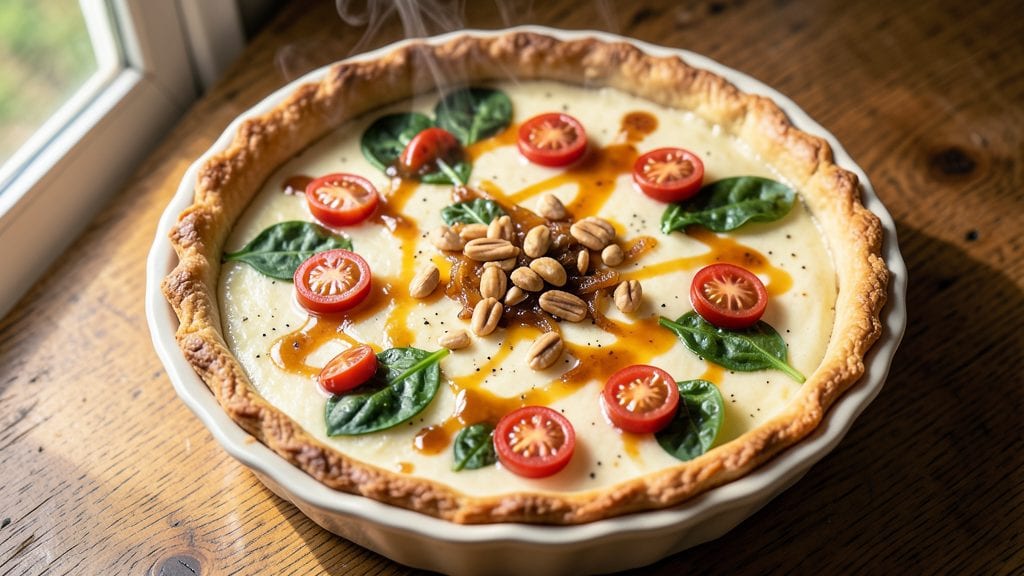
This Magnolia Three Cheese Quiche delivers the perfect balance of flaky crust, creamy custard, and three layers of melted cheeses—just like the ones you'd find at a Southern breakfast table. The secret lies in a properly blind-baked crust and a rich, herb-infused filling that creates melt-in-your-mouth texture.
I've perfected this recipe over years of testing, ensuring every bite delivers that signature Southern comfort without sacrificing elegance.
The recipe begins with a classic pie crust, blind-baked to golden perfection before filling it with a velvety mixture of eggs, heavy cream, and three distinct cheeses—sharp cheddar, Gruyère, and cream cheese—that melt into a luscious, stretchy layer.
A touch of Dijon mustard and fresh herbs adds depth, while the crust remains crisp and buttery. Baking at the right temperature ensures the center stays perfectly set while the edges stay tender.
What you'll end up with is a quiche that's as impressive on the plate as it is delicious in your mouth—golden crust, creamy custard, and three distinct cheese layers that pull apart beautifully.
This recipe serves six, making it ideal for brunch gatherings or a special weekend breakfast. The aroma alone will have everyone gathering in the kitchen as it bakes.
For extra flair, garnish with fresh chives or a sprinkle of smoked paprika before serving. Store leftovers in the refrigerator for up to three days, though I doubt they'll last that long. This quiche is the kind of dish that transforms an ordinary morning into something truly special.
Ingredients for magnolia three cheese quiche
Six ingredients for the crust, nine for the filling—simple enough for weeknights but special enough for company.
| Ingredient | Amount | Notes |
|---|---|---|
| All-Purpose Flour 🌾 | 2 ½ cups | For pie crust, sifted |
| Unsalted Butter 🧈 | 1 cup | Cold, cubed for crust |
| Ice Water 💧 | ½ cup | Chilled for pie crust |
| Large Eggs 🥚 | 3 whole | Room temperature |
| Heavy Cream 🥛 | 1 cup | Full-fat for richness |
| Sharp Cheddar Cheese 🧀 | 1 cup | Shredded, aged for flavor |
| Gruyère Cheese 🧀 | ¾ cup | Shredded, nutty variety |
| Cream Cheese 🧀 | 8 oz | Full-fat, room temperature |
| Dijon Mustard 🍯 | 1 tbsp | For depth of flavor |
| Fresh Chives 🌿 | ¼ cup | Chopped, for garnish |
| Salt 🧂 | 1 ½ tsp | Kosher or sea salt |
| Black Pepper 🌶️ | ½ tsp | Freshly ground preferred |
| Smoked Paprika 🌶️ | ½ tsp | For garnish and color |
The crust is where it all begins. Crisco or butter? Butter wins here—it's richer and more flavorful, but if you're in a rush, Crisco works fine. I grab my butter from Whole Foods when I can, but the regular store brand is fine too. For the flour, King Arthur or Gold Medal are my go-tos—they're reliable and give that perfect flaky texture. Keep everything cold when mixing the dough, and don't overwork it. The secret to a good crust is in the chilling: let the dough rest for at least 30 minutes before rolling it out.
Cheese is the star, so don't cut corners. Gruyère is a must—it adds that nutty depth that makes this quiche feel special. No Gruyère? Parmesan works in a pinch, but it won't be the same. The cheddar should be sharp, not mild, and the cream cheese needs to be full-fat for that melt-in-your-mouth texture. For the chives, fresh is best, but if you're out, dried chives at half the amount will do. The Dijon mustard might seem like an odd addition, but it adds a tangy kick that balances the richness of the cheeses. If you don't have it, a splash of lemon juice works too.
This quiche is best served fresh, but leftovers reheat beautifully. Store it in the fridge for up to 3 days, covered tightly. To reheat, pop it in the oven at 350°F for 10-15 minutes until it's warm through. The crust stays crispy, and the cheeses melt back into that creamy perfection. For extra flair, sprinkle a little smoked paprika on top before serving—it adds a nice contrast to the golden crust and creamy filling. And if you're prepping ahead, you can blind-bake the crust the day before and store it in the fridge.
Why You'll Love This Recipe
- No-Fuss Crust: I swear by that cold butter cut into flour—it’s the secret to a flaky crust that barely needs rolling. Five minutes of mixing, chilling, and pressing, and you’re done. (Yes, even if your kitchen looks like mine did this morning.)
- Three-Cheese Magic: Sharp cheddar, creamy gouda, and that melt-in-your-mouth brie—this combo is ridiculously good. The heavy cream makes it silky, while the eggs hold it all together like a hug from a Southern grandma.
- Weeknight to Brunch: Make it for Tuesday dinner or Sunday brunch—no judgment. Slice it up for lunchboxes, serve it at a potluck, or just eat the whole thing straight from the pan. (I’ve done all three.)
- Leftovers? Please.: This quiche actually tastes better the next day—crispier crust, richer filling. Plus, the heavy cream and eggs stretch every dollar, so you’re not just feeding your family, you’re feeding your wallet too.
Step-by-step instructions for magnolia three cheese quiche
Here's how to create a flaky, golden crust with layers of creamy, melty cheese filling.
Prepare the Perfect Pie Crust
In a large bowl, combine the 2.5 cups all-purpose flour with the 1.5 teaspoons salt and 0.5 teaspoon black pepper. Cut in the 1 cup unsalted butter using a pastry cutter or your fingers until the mixture resembles coarse crumbs with pea-sized butter pieces. This texture is crucial for a flaky crust.
Add the 0.5 cup ice water gradually, mixing just until the dough comes together. Avoid overworking it—press the dough together gently until it holds when pressed. Wrap the dough tightly in plastic wrap and refrigerate for at least 1 hour (or up to 24 hours). This resting time relaxes the gluten for a tender crust.
Roll and Blind-Bake the Crust
On a lightly floured surface, roll the chilled dough into a 12-inch circle about 1/8-inch thick. Transfer it to a 12-inch pie dish, gently pressing it into the bottom and up the sides. Trim any excess dough hanging over the edge. Prick the bottom all over with a fork to prevent puffing during baking.
Preheat your oven to 375°F. Line the crust with parchment paper, fill it with pie weights or dried beans, and bake for 15 minutes. Remove the weights and bake for another 5-7 minutes until the edges are lightly golden. The crust should be set but not browned yet—this prevents a soggy bottom when adding the filling.
Prepare the Three-Cheese Filling
In a medium bowl, beat the 3 whole large eggs until just combined. Add the 1 cup heavy cream, 1 tablespoon Dijon mustard, 0.5 teaspoon smoked paprika, and 0.25 cup chopped fresh chives, mixing gently to combine. This mixture should be smooth and well incorporated.
In a separate bowl, combine the 1 cup shredded sharp cheddar cheese, 0.75 cup shredded gruyère cheese, and 8 ounces cream cheese. Cut the cream cheese into small cubes first to help it melt more evenly. Gradually add the cheese mixture to the egg mixture, stirring just until combined. The filling should be thick but pourable—if it's too stiff, you can add 1-2 tablespoons ice water to loosen it.
Assemble and Bake the Quiche
Pour the cheese filling into the pre-baked crust, spreading it evenly to the edges. Sprinkle the remaining 0.25 cup chopped fresh chives over the top for a pop of color and fresh flavor. The filling should come about 3/4 of the way up the crust's sides—this prevents overflow during baking.
Bake at 350°F for 40-45 minutes, until the filling is set and the top is golden brown. The center should still be slightly jiggly—it will continue to firm up as it cools. If the edges brown too quickly, cover them loosely with aluminum foil. Let the quiche cool for 10 minutes before slicing—this allows the filling to set properly and makes it easier to serve.
Serve and Enjoy
Use a sharp knife to cut the quiche into 6 equal wedges, wiping the knife between cuts to ensure clean slices. Serve warm or at room temperature. The crust should be crisp and flaky, while the filling should be creamy with pockets of melted cheddar, nutty gruyère, and smooth cream cheese. Each bite delivers a perfect balance of textures and flavors.
This quiche holds well for 2-3 days in the refrigerator, making it a great make-ahead dish for brunch or a comforting meal any time of day. Leftovers reheat beautifully in the oven at 325°F for 10-15 minutes to restore the creamy texture.
Pro Tips For Making Magnolia Three Cheese Quiche
- Chill the Dough: DESCRIPTION: Roll out the crust cold—literally. I used to skip this, and the butter would melt too fast, making the crust soggy by the time it hit the oven. Wrap the dough in plastic and refrigerate for at least 30 minutes before rolling. Yes, even if you're eager to get baking.
- Whisk Eggs Like Mad: DESCRIPTION: Beat those eggs and heavy cream until the mixture is thick and glossy—no streaks, no lumps. Use a whisk or a fork and go for at least 2 minutes. I learned this after a quiche came out rubbery; the cheese clumped because the eggs weren’t fully emulsified.
- Pre-Bake the Crust: DESCRIPTION: Blind-bake the crust for 10-12 minutes at 375°F before adding the filling. Sprinkle parchment paper and pie weights (or dried beans) on top to prevent puffing. This stops the crust from turning to mush when the wet filling bakes—trust me, it’s non-negotiable for this recipe.
- Salt the Cream: DESCRIPTION: Season the heavy cream before mixing it with the eggs—about ½ teaspoon of salt per cup. I was lazy about this once and the quiche tasted bland, even with all that sharp cheddar. The cream soaks up flavor early, so don’t skip it.
Common mistakes when making your magnolia three cheese quiche
Over-Baking the Crust
One of the most common mistakes is over-baking the crust before adding the filling. A golden crust is ideal, but if you bake it too long, it can turn brown and lose its flakiness.
I’ve ruined many quiches by letting the crust sit in a 375°F oven for more than 20 minutes total. Keep an eye on it—remove the weights and bake just until the edges are set (about 5-7 minutes after removing weights).
A fully baked crust will soak up the custard and become soggy. 🌡️
Skipping Blind-Baking
If you skip blind-baking the crust, the filling’s moisture will make it soggy instead of crisp. I’ve made this mistake more times than I’d like to admit—just pouring the filling into a raw crust and hoping for the best.
Always pre-bake the crust with weights or dried beans to create a sturdy base. This step ensures the crust holds its shape and stays crispy even after the custard cooks. The filling should sit on top of a fully set crust, not seep into it.
Under-Mixing the Filling
Stirring the cheese filling too vigorously can create lumps, especially with the cream cheese. I’ve seen quiches where the filling looked streaky and uneven because the cheeses weren’t fully incorporated. Gently fold the cheeses into the egg mixture just until combined—overmixing can also make the custard tough.
If the filling is too thick, add 1-2 tablespoons ice water to loosen it, but don’t overdo it, or the quiche will be watery. 🧀
Using Wrong Cheese Ratios
The three-cheese combination is key to this recipe’s success. Using too much sharp cheddar can overpower the delicate flavors, while too little Gruyère will lack that nutty depth. I once made a quiche with only cheddar and cream cheese—it tasted flat and one-dimensional.
Stick to the 1:0.75:1 ratio of cheddar, Gruyère, and cream cheese for the perfect balance. Pre-shredded cheeses often contain anti-caking agents, so I always shred my own for the best texture.
Baking at Wrong Temperature
Baking at too high a temperature can cause the quiche to set too quickly on top while staying undercooked inside. Conversely, too low a temperature can leave the center runny.
I’ve had quiches where the top was golden but the middle was still jiggly—this happens when baking at 325°F instead of the recommended 350°F.
Use an oven thermometer to ensure accuracy, and check the doneness by gently shaking the quiche—it should jiggle slightly in the center but not be liquid. 🔥
Not Resting Before Slicing
Cutting into the quiche too soon can cause the filling to slide out of the crust or create messy slices. I’ve seen quiches where the filling was still wobbling when served, making clean cuts impossible.
Always let the quiche rest for at least 10 minutes after baking—this allows the filling to set and the juices to redistribute. For even better results, rest it for 15-20 minutes before slicing. This also gives the crust time to firm up slightly, making it easier to serve neat wedges.
Nutrition facts
Frequently asked questions
Can I make this quiche ahead of time?
The crust can be blind-baked and stored in the fridge for up to 24 hours before adding the filling. For a fully assembled quiche, bake it and let it cool completely, then refrigerate for up to 3 days. Reheat slices in the oven at 325°F for 10-15 minutes to restore that creamy texture. The flavors actually improve overnight as the cheeses meld together!
What if I don't have Gruyère cheese?
No problem! Use Parmesan or fontina as substitutes—they'll add nutty depth without changing the texture dramatically. For a milder option, try Swiss cheese, but reduce the amount to 0.5 cup to avoid overpowering the other cheeses. The key is maintaining that creamy, melt-in-your-mouth quality.
Why did my quiche filling get watery?
Watery filling usually means one of two things: either you added too much liquid (like extra cream or water) or the quiche didn't bake long enough. Always stir the filling gently and add liquid sparingly—just 1-2 tablespoons if needed. Bake until the center jiggles slightly (it'll firm up as it cools) and the top is golden brown. A toothpick should come out clean but slightly moist.
Can I use a store-bought pie crust?
Yes, but for the best results, choose a high-quality refrigerated crust and follow the package directions for pre-baking. If using a frozen crust, thaw it completely and blind-bake it for 15-20 minutes at 375°F before adding the filling. The homemade crust gives better flavor and texture, but a good store-bought crust works in a pinch. Just be extra careful not to overbake it!
How do I make this quiche vegetarian?
This quiche is already vegetarian! The filling contains no meat products, just eggs, cream, and three types of cheese. For extra flair, you could add sautéed mushrooms, spinach, or roasted red peppers to the filling before baking. Just make sure to drain any excess liquid from vegetables to keep the filling thick and creamy.