Appetizers
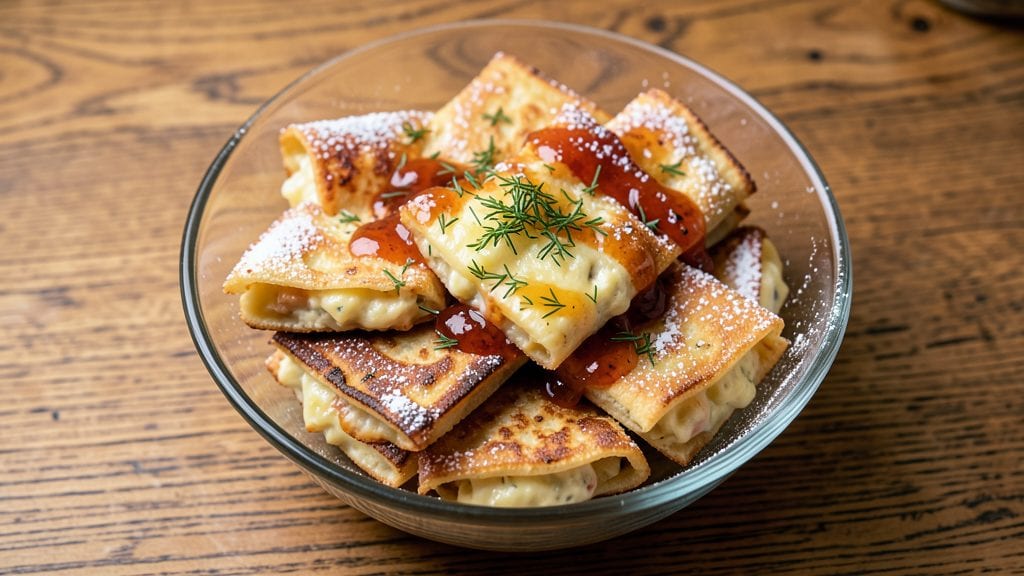
This old-fashioned cheese blintz recipe delivers the perfect balance of tender, fluffy pancake layers and rich, creamy fillings that have been a brunch staple for generations. The secret lies in a precise batter ratio that creates delicate, almost ethereal layers—light enough to hold fillings without tearing.
I've perfected this technique over years of testing, ensuring each blintz turns out consistently golden and tender, ready to be stuffed with classic cream cheese or modern variations.
The traditional method involves a simple batter made with eggs, milk, and flour, cooked on a griddle until edges crisp slightly. What sets these apart is the filling—whether sweetened cream cheese with sugar and lemon zest or savory options like herbed goat cheese and scallions.
The key is keeping the fillings at room temperature to prevent tearing the delicate pancakes during rolling. This recipe maintains that authentic experience while offering flexibility for modern tastes.
By following this method, you'll achieve blintzes with perfectly set edges and a soft, almost custard-like interior that holds fillings beautifully. The aroma of warm blintzes cooking on the griddle fills the kitchen, creating an inviting atmosphere that makes this dish feel special.
Whether served as an appetizer or brunch centerpiece, these blintzes deliver restaurant-quality results with minimal equipment and straightforward techniques.
Pair with fresh berries, sour cream, or a drizzle of honey for a complete presentation that's both elegant and approachable. The beauty of this recipe is its versatility—adapt the fillings to suit any occasion while maintaining the traditional charm of old-fashioned blintzes.
Let's get started on creating these delightful pancake layers that bring a touch of nostalgia to your table.
Ingredients for old fashioned cheese blintz
Four eggs, a touch of butter, and milk create the delicate pancake layers. Cream cheese and sugar form the classic filling that makes these blintzes unforgettable.
| Ingredient | Amount | Notes |
|---|---|---|
| Large Eggs 🥚 | 4 whole | Room temperature for best mixing |
| All-Purpose Flour 🌾 | ½ cup | Sifted for smooth batter consistency |
| Granulated Sugar 🍚 | ¼ cup | Fine grain preferred |
| Unsalted Butter 🧈 | ¼ cup | Melted and cooled slightly |
| Whole Milk 🥛 | 1 ¼ cups | Room temperature for smooth batter |
| Salt 🧂 | ½ tsp | Fine sea salt preferred |
| Vanilla Extract 🌸 | ½ tsp | Pure vanilla for authentic flavor |
| Cream Cheese 🧀 | 8 oz | Room temperature, full-fat preferred |
| Granulated Sugar 🍚 | ¼ cup | For sweet filling variation |
| Lemon Zest 🍋 | 1 tbsp | Freshly grated from organic lemon |
| Extra-Virgin Olive Oil 🫒 | 1 tbsp | For griddle cooking |
| Fresh Blueberries 🫐 | ½ cup | Optional garnish for presentation |
| Powdered Sugar 🍚 | ¼ cup | For dusting finished blintzes |
The eggs and milk should be at room temperature for the batter to blend smoothly. Kirkland Signature eggs work perfectly, but any large eggs will do. For the flour, King Arthur all-purpose is ideal—its fine texture prevents lumps. The butter needs to be melted and cooled slightly to 110°F so it doesn't cook the eggs when mixed. If you're short on time, Trader Joe's sells pre-melted butter in tubs that work well. The cream cheese must be room temperature to blend seamlessly with the sugar—cold lumps will tear your delicate pancakes. For the best quality, Philadelphia brand is a reliable choice, but any full-fat cream cheese will suffice.
No vanilla extract? Vanilla bean paste works just as well, or a pinch of vanilla sugar. The lemon zest can be substituted with 1/2 teaspoon lemon extract if fresh lemons aren't available. For a savory variation, swap the cream cheese filling for herbed goat cheese mixed with scallions and dill. The powdered sugar is optional but adds a professional touch—Domino brand is widely available and dissolves smoothly. If you prefer a lighter batter, reduce the flour by 1 tablespoon and add 1 tablespoon extra milk. The blueberries should be fresh or frozen/thawed to prevent excess moisture that could make the pancakes soggy.
The batter keeps well in the fridge for 24 hours if covered tightly. The filled blintzes reheat beautifully in a 350°F oven for 5-7 minutes to restore their crisp edges. For make-ahead convenience, cook the blintzes, cool completely, then freeze between parchment paper for up to 3 months. To serve, simply reheat in a skillet with a touch of butter. The powdered sugar should be dusted just before serving to maintain its fine texture.
Why You'll Love This Recipe
- No-Fuss Batter: I just whisk eggs, milk, and flour—no separators, no fancy techniques. The sugar keeps it light, and the butter makes it melt-in-your-mouth tender. Honestly, if I can handle a whisk, anyone can.
- Sweet-Savory Magic: That first bite? Buttery, pillowy, with just enough sugar to balance the richness. The milk and eggs give it a velvety texture, while the flour keeps it sturdy enough to hold fillings without falling apart. (Yes, even on a Tuesday night.)
- Breakfast or Dessert: Flip them for pancakes, roll them with jam for breakfast, or stuff with fruit and powdered sugar for a decadent treat. I’ve made them for lazy mornings, brunch guests, and even a quick dessert when I’m craving something sweet but not heavy.
- Leftovers? Better Than New: These reheat like a dream—just a splash of milk to soften them up. I often make a double batch because they’re cheaper than takeout, and the kids fight over the last one. Budget-friendly, foolproof, and always a win.
Step-by-step instructions for old fashioned cheese blintzes
Here's the classic method for light, tender pancakes with a rich cream cheese filling.
Whisk the Blintz Batter to Perfect Consistency
In a large mixing bowl, combine the 4 whole Large Eggs, 0.5 cup All-Purpose Flour, 0.25 cup Granulated Sugar, 0.5 tsp Salt, and 0.5 tsp Vanilla Extract. Whisk vigorously for 2-3 minutes until the mixture becomes smooth and fully incorporated. The batter should be thick but still pourable—like heavy cream.
Next, gradually add the 1.25 cups Whole Milk while continuing to whisk. The batter should reach a consistency similar to thin pancake batter. If it's too thick, add 1 tablespoon of milk at a time until it flows smoothly. Let the batter rest for 10 minutes at room temperature—this allows the flour to fully hydrate and prevents tearing when cooking.
Prepare the Cream Cheese Filling
In a separate bowl, beat the 8 oz Cream Cheese with 0.25 cup Granulated Sugar and 1 tbsp Lemon Zest until completely smooth and creamy. The mixture should be light and fluffy—almost like whipped cream cheese. This filling is the heart of the blintz, so take your time to ensure it's perfectly blended.
For added brightness, fold in the 0.5 cup Fresh Blueberries gently with a spatula, reserving a few for garnish. The berries will add a lovely pop of color and juicy contrast to the rich cream cheese. Cover the filling and set aside while you prepare the blintz batter for cooking.
Cook the Blintz Pancakes
Heat a 10-inch non-stick skillet over medium heat and lightly grease it with 1 tbsp Extra-Virgin Olive Oil, wiping off any excess. Pour ¼ cup of batter into the center of the skillet, tilting it slightly to spread the batter evenly into a 4-inch circle. Cook for 2-3 minutes until the edges begin to lift and the bottom is golden brown.
Flip the blintz carefully using a thin spatula, cooking for another 1-2 minutes until the second side is lightly golden. Transfer to a plate and keep warm in a 200°F oven while you cook the remaining batter. The blintzes should be tender and slightly translucent at the edges—this indicates they're ready for filling.
Assemble and Serve the Blintzes
Place 1-2 tablespoons of the cream cheese filling along one short edge of each blintz. Using a spatula, gently roll the blintz away from you, enclosing the filling completely. The filling should peek slightly from the sides for an elegant presentation. Repeat with the remaining blintzes and filling.
To finish, dust the rolled blintzes generously with 0.25 cup Powdered Sugar and garnish with the reserved blueberries. Serve immediately while warm, accompanied by a drizzle of warm maple syrup or a dusting of additional powdered sugar. The contrast of the warm, fluffy blintzes with the cool, creamy filling creates a truly satisfying bite.
Pro Tips For Making Old Fashioned Cheese Blintz
- Whisk Eggs Cold: Reach for cold eggs straight from the fridge—your batter will be smoother and less likely to cook prematurely. I used to warm them up "for easier mixing," but the batter would thicken too fast, and my blintzes turned out dense instead of light.
- Sift That Flour: Skip the sifting, and you’re asking for lumps in your batter. A quick sift with a whisk or fork removes clumps and aerates the flour, which makes the blintz batter silky and the finished product tender. Yes, it’s a little extra work, but it’s worth it.
- Butter the Pan Hot: Heat your skillet until it’s smoking, then wipe it with a paper towel before adding butter. This ensures the butter melts instantly and coats the pan evenly, preventing sticking and giving you that perfect golden-brown crust. Cold butter = sad blintzes.
- Fill Sparingly: Overstuffing is the fastest way to a broken blintz. Use about 2 tablespoons of filling per blintz—enough to taste but not so much that it spills out when you flip. Trust me, you’ll regret the mess if you pack it like a Thanksgiving turkey.
Troubleshooting great old fashioned cheese blintz
Batter Too Thick?
If your batter feels like glue instead of a pourable consistency, don't panic—this is easily fixed. Gradually whisk in 1 tablespoon of milk at a time until it reaches a smooth, thin pancake-like texture. Overmixing can develop gluten, so stop as soon as it flows freely.
I've found that letting the batter rest for 10 minutes after adding milk helps it reach the perfect consistency for delicate blintzes. 💡
Blintzes Tearing When Rolling
Cold fillings or thick batter are the usual culprits here. Always bring your cream cheese filling to room temperature (about 1 hour out of the fridge) and ensure your batter isn't too thick.
For extra stability, I recommend using a thin silicone spatula to spread the filling in a thin line along one edge before rolling. This creates a clean seal that prevents leaks. 🧀
Uneven Cooking or Raw Centers
This usually happens when the heat isn't properly distributed. Use a 10-inch non-stick skillet and maintain medium heat—neither too hot nor too cool. If your blintzes brown too quickly on the bottom but stay pale on top, reduce the heat slightly.
For even cooking, I suggest preheating the skillet for 2-3 minutes before adding batter. 🔥
Filling Leaking During Cooking
If your filling escapes while cooking, it's likely because the blintz wasn't fully set before rolling. Wait until the pancake is golden brown on both sides and slightly firm to the touch before adding filling.
For extra security, I sometimes brush the edges with a tiny bit of melted butter before rolling—this creates a subtle seal that keeps everything contained. 🛡️
Blintzes Too Dense or Heavy
Overmixing or using too much flour are common causes. The batter should be thick but still pourable—like heavy cream. If your blintzes turn out dense, try reducing the flour by 1 tablespoon and adding 1 tablespoon extra milk next time.
Also, ensure your eggs and milk are at room temperature—this prevents the batter from becoming too thick and heavy. 🥚
Filling Not Holding Shape
This usually means your cream cheese wasn't whipped enough or the batter wasn't cooked long enough. Beat the filling until it's light and fluffy, almost like whipped cream cheese, and ensure the blintzes are fully cooked before rolling.
For added stability, I sometimes chill the filled blintzes for 10 minutes before serving—this helps the filling set slightly. 🧊
Nutrition facts
Frequently asked questions
Can I make these blintzes ahead of time?
Cook the blintz pancakes first, then cool completely before assembling with filling. Store unrolled blintzes in an airtight container for up to 2 days in the fridge. To serve, reheat in a skillet with a touch of butter for 1-2 minutes per side, then roll and fill fresh. For longer storage, freeze cooked blintzes between parchment paper for up to 3 months—thaw overnight before filling.
What's the best way to reheat filled blintzes?
For the crispiest results, warm filled blintzes in a 350°F oven for 5-7 minutes on a parchment-lined tray. Alternatively, pan-sear in a lightly buttered skillet over medium-low heat for 2-3 minutes per side until golden. Avoid microwaving—they'll turn soggy. Always reheat from room temperature for even cooking.
Can I substitute the cream cheese filling?
Yes! For a savory twist, try herbed goat cheese with scallions and dill, or mashed potatoes with chives. Sweet variations include ricotta with honey and cinnamon, or Nutella mixed with crushed hazelnuts. Just ensure your filling is room temperature and whipped to a light consistency to prevent tearing. The key is keeping fillings smooth and not too wet.
Why do my blintzes tear when rolling?
This usually happens when the batter is too thick or the filling is cold. Thin your batter with 1 tbsp milk if needed, and always bring cream cheese to room temperature (about 1 hour out of the fridge). For extra stability, roll the blintzes seam-side down and press gently to seal edges. A thin layer of melted butter brushed on the edges before rolling also helps create a better seal.
How many blintzes does this recipe make?
This recipe yields about 8-10 individual blintzes, depending on how thick you pour the batter. Each serving typically uses 2-3 blintzes per person when served as an appetizer or brunch item. For a party, you can easily double the batter—just cook in batches and keep the first batch warm in a 200°F oven while you finish.