Main Courses
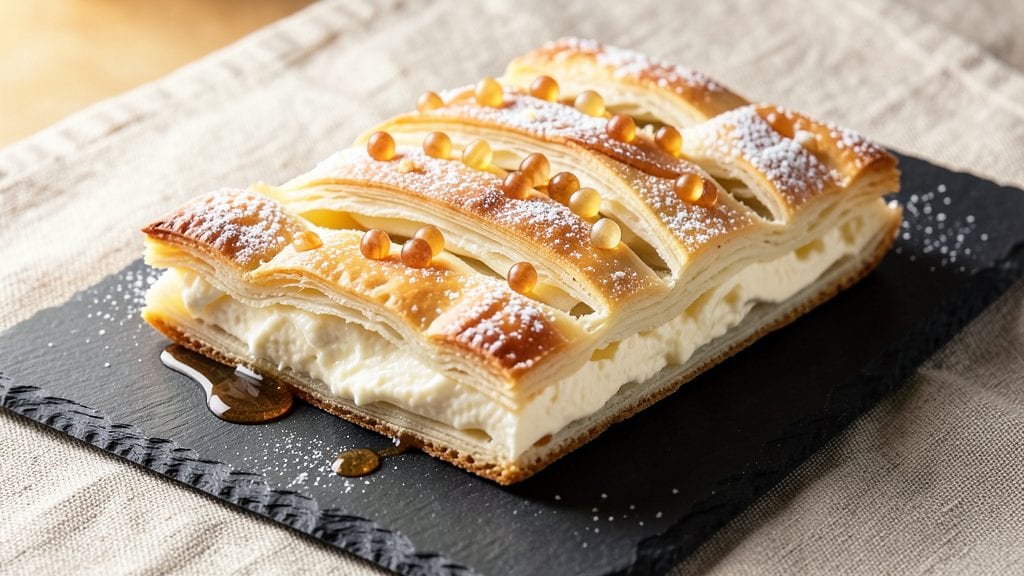
This Philadelphia cream cheese pastry recipe delivers the perfect balance of flaky, golden layers and a rich, gooey cream cheese filling that melts in your mouth. 🌟 After years of perfecting my pastry technique—starting with Mrs. Henderson's apple butter lessons in Cincinnati—I've cracked the code for a texture that's crisp yet tender, with a filling so velvety it disappears before you can say "second slice."
The secret lies in two key steps: chilling the dough thoroughly to prevent shrinking and baking it just until the edges are golden, then letting it finish setting in the oven with the filling.
This ensures your pastry emerges with those signature flaky layers while keeping the cream cheese center perfectly smooth and rich. The filling itself is a simple blend of Philadelphia cream cheese, sugar, and a touch of vanilla, but it's the technique that transforms it into something extraordinary.
What you'll end up with is a pastry that looks like it came from a high-end bakery—crisp edges, tender layers, and a filling so luscious it practically oozes with every bite.
The aroma alone will have everyone gathering around your kitchen, and the first slice will disappear faster than my pancake batter used to vanish when I was six. This recipe is foolproof, with clear instructions that even beginner bakers can follow to achieve professional results.
Serve it warm with a dusting of powdered sugar or a drizzle of caramel for a restaurant-worthy dessert that's surprisingly simple to make at home. The possibilities for variations are endless—add lemon zest for brightness, berry compote for freshness, or a sprinkle of cinnamon for warmth.
Let's create something truly special together.
Ingredients for philadelphia cream cheese pastry
Flaky layers and gooey filling start with these simple, quality ingredients you likely already have.
| Ingredient | Amount | Notes |
|---|---|---|
| All-Purpose Flour 🌾 | 3 cups | Sifted for light texture |
| Unsalted Butter 🧈 | 1 cup | Cold, cubed for pastry |
| Philadelphia Cream Cheese 🧀 | 8 oz | Room temperature for filling |
| Granulated Sugar 🍚 | ½ cup | Plus extra for sprinkling |
| Vanilla Extract 🍯 | 1 tsp | Pure extract preferred |
| Ice Cubes ❄️ | ½ cup | For chilling dough |
| Salt 🧂 | ½ tsp | Fine sea salt |
| Powdered Sugar 🍚 | 2 tbsp | For dusting top |
| Heavy Cream 🥛 | ¼ cup | Optional for richness |
| Lemon Zest 🍋 | 1 tbsp | Optional for brightness |
| Egg 🥚 | 1 whole | For egg wash |
The butter matters most here—European-style or Plugrá gives the best flakiness, but regular unsalted works too. Grab it from the deli section at Whole Foods or your local grocery store's bakery aisle for the highest fat content. Keep it cold until mixing—cut into small cubes and chill for 30 minutes before starting. The flour should be all-purpose, not bread flour—this is a delicate pastry, not a loaf. Sift it once to avoid lumps, and don't skip this step (trust me, it makes a difference).
No Philadelphia cream cheese? Whipped cream cheese plus extra butter gets you close, but the texture won't be identical. The vanilla extract can be imitation, but pure extract has better flavor. Running short on sugar? Honey or maple syrup at half the amount works for the filling, though it'll be slightly more liquid. For the egg wash, milk plus a splash of vanilla is a decent substitute if you're out of eggs. The lemon zest is optional but adds that bright note that makes it feel special—organic lemons from the grocery store work perfectly.
The dough needs to chill at least 1 hour—pop it in the fridge while you make the filling. Wrap it tightly in plastic to prevent drying. The filling keeps for 2 days in the fridge, but the dough is best used fresh. If you need to prep ahead, shape the dough, wrap it, and refrigerate overnight. The finished pastry reheats beautifully—350°F for 5-10 minutes until warm through. Store leftovers covered at room temperature for 2 days or freeze for 3 months (wrap tightly in foil).
Why You'll Love This Recipe
- No-Fuss Assembly: The dough comes together in three steps—no stand mixer, no fuss. Just cold butter, cream cheese, and flour rubbed between your fingers until it holds. I’ve made this while chatting on the phone, and it’s never failed me.
- Velvet-Crisp Magic: That buttery, flaky top with the tender cream cheese center? It’s the kind of texture that makes you pause mid-bite. The sugar and vanilla in the dough caramelize just enough to give it a subtle sweetness—like a hug from a dessert you didn’t know you needed.
- Bakes into Anything: Need a pie crust? A hand pie for potlucks? Even a quick breakfast tart? This dough stretches to all of it. I’ve used it for apple galettes, cheese straws, and even a lazy weekend croissant—no fancy shaping skills required.
- Leftovers That Last: The dough keeps perfectly in the fridge for five days, and baked goods stay fresh for three. Honestly, I often make a double batch because it’s that reliable. Plus, the butter and cream cheese are pantry staples—no weird ingredients to track down.
Step-by-step instructions for Philadelphia cream cheese pastry
This method delivers restaurant-quality flaky layers with a gooey cheese filling every time.
👨🍳 Step 1: Prepare the Cold Butter and Flour Base
Place the 1 cup unsalted butter (cold and cubed) and 3 cups all-purpose flour (sifted) in a large bowl. Use your fingers or a pastry cutter to work the butter into the flour until you achieve a texture resembling coarse crumbs with pea-sized butter pieces. This is crucial—overworking will develop gluten and ruin the flakiness.
I like to press the mixture between my fingers to check consistency. You should feel small butter pieces still visible, not fully incorporated. Add the 0.5 tsp salt and mix lightly. Sprinkle 0.5 cup ice cubes over the mixture and toss gently to coat. The ice will help keep everything cold during mixing.
👨🍳 Step 2: Create the Cream Cheese Filling
In a separate bowl, beat the 8 oz Philadelphia cream cheese (room temperature) with the 0.5 cup granulated sugar until smooth. Add the 1 tsp vanilla extract, 0.25 cup heavy cream, and 1 tbsp lemon zest (if using), mixing until fully combined. This filling should be thick but spreadable—like a rich, tangy cream cheese frosting.
Here's the thing—don't skip letting the cream cheese warm to room temperature. Cold cream cheese won't blend smoothly and will create lumps in your filling. If yours is still cold, microwave it for 10-15 seconds to soften before mixing. Taste and adjust sweetness if needed, but remember this filling needs to be balanced with the flaky crust.
🥘 Step 3: Assemble the Pastry Layers
On a lightly floured surface, gently press the butter-flour mixture into a 12-inch circle about ¼-inch thick. Fold it in half like a letter, then in half again. This creates four layers that will become your flaky pastry. Roll it back out to 12 inches and transfer to a parchment-lined baking sheet.
Spread the cream cheese filling evenly over the rolled-out dough, leaving a 1-inch border around the edges. This prevents filling from oozing out during baking. Gently roll up the pastry from the long side, then slice into 1-inch thick rounds. Arrange them on a parchment-lined baking sheet, spacing them 1 inch apart—they'll expand.
🔥 Step 4: Bake to Golden Perfection
Preheat your oven to 375°F. Whisk the 1 whole egg with a splash of water, then brush it over the pastries. Sprinkle with 2 tbsp powdered sugar and a pinch of extra granulated sugar for that golden caramelized top. Bake for 20-25 minutes until the edges are deep golden brown and the filling is just starting to bubble through the cracks.
Here's where patience pays off—don't overbake. The pastries should be firm to the touch but still soft in the center. If the tops aren't golden enough, broil for 1-2 minutes at the end, watching closely to avoid burning. Let them cool on the baking sheet for 5 minutes before transferring to a wire rack.
⏰ Step 5: Serve Warm with Optional Glaze
Serve the pastries warm, straight from the oven. The filling should be gooey and warm, oozing slightly when cut. For extra decadence, drizzle with a simple glaze made by mixing 2 tbsp powdered sugar with 1 tsp heavy cream and a pinch of lemon zest. This enhances the brightness and adds that professional touch.
Real talk—they're best enjoyed within 2 hours of baking when the layers are still crisp and the filling is warm. If storing, keep them in an airtight container at room temperature for up to 2 days, but reheat briefly in the oven to restore that perfect texture.
Pro Tips For Making Philadelphia Cream Cheese Pastry
- Chill the Cream Cheese First: I learned this the hard way—room-temperature cream cheese gets greasy when mixed with butter. Pop that block in the fridge for 15-20 minutes before cutting it into cubes. Cold cubes blend smoother and keep your dough from turning into a sad, sticky mess.
- Cut Butter in Small Batches: Yes, even if you're impatient like me. Pulse the butter in your mixer in 2-3 tablespoon increments while the cream cheese is still cold. This prevents the butter from melting too fast and turning your dough into a crumbly disaster. Think of it like adding ice to a cocktail—slow and steady.
- Skip the Overmixing Trap: The moment your dough starts looking like wet sand, stop. Overmixing develops gluten, and this pastry needs to stay tender. Just until the flour is barely incorporated—about 30 seconds past the point where it looks shaggy. Your future self will thank you when it flakes perfectly.
- Use a Bench Scraper for Rolling: Sounds weird, but it works: Slide a bench scraper under the dough every 2-3 rolls to prevent sticking. This keeps the dough from tearing and saves you from having to re-knead or patch holes. Plus, it’s faster than flouring your surface repeatedly—no more dust everywhere.
Troubleshooting this dish
Dough Too Tough
If your pastry dough turns out tough instead of flaky, you likely overworked the butter and flour mixture. The key is to handle it minimally—just until pea-sized butter pieces remain visible.
I've found that using a pastry cutter or your fingers to gently work the butter into the flour prevents gluten development. Also, ensure your butter is cold (not softened) and your flour is sifted—this keeps the texture light.
If the dough feels too dry, add just 1 tsp ice water to help bind it without losing flakiness. 🥚
Filling Oozes Out
Excessive filling leakage usually means your pastry wasn't sealed properly during assembly. Leave a 1-inch border of dough around the edges before adding the cream cheese mixture—this creates a barrier. When rolling up, press the edges gently to seal.
If the filling still escapes, try chilling the assembled pastries for 15 minutes before baking to help them hold their shape. Pro tip: Use a bench scraper to smooth the dough edges for a cleaner finish. 🧀
Pastry Won’t Brown
A pale, underbaked pastry often results from insufficient egg wash or oven temperature fluctuations. Brush the pastries with a thin, even layer of egg wash (1 egg + 1 tbsp water) and sprinkle with powdered sugar for caramelization.
Preheat your oven to 375°F and place a baking sheet on the middle rack—this ensures even heat distribution. If using a dark baking sheet, swap for light-colored for better browning. 🔥
Filling Too Runny
The cream cheese filling may separate or become too thin if the cream cheese isn't at room temperature or if too much liquid is added. Always let the 8 oz Philadelphia cream cheese soften to room temperature (about 1 hour) before mixing.
If the filling looks too loose, chill it for 10 minutes to thicken slightly. For extra stability, fold in 1 tbsp all-purpose flour to the mixture—it blends right in and firms up the texture. 🥛
Shrinking During Bake
Shrinking happens when the dough isn't chilled long enough before baking. The butter needs time to solidify and set the layers. After rolling out the dough, wrap it tightly in plastic and refrigerate for at least 1 hour (or up to overnight).
If you're short on time, freeze the shaped pastries for 15 minutes before baking to mimic the chilling effect. This trick keeps the layers intact and prevents that dreaded "caved-in" look. ❄️
Bland Flavor Profile
If your pastry tastes flat, the filling likely needs more depth. Boost the flavor by adding 1 tsp lemon juice or ½ tsp cinnamon to the cream cheese mixture. For a brighter note, fold in 1 tbsp sour cream alongside the heavy cream.
I also recommend toasting the powdered sugar used for dusting—spread it on a baking sheet and warm at 300°F for 2 minutes—this adds a subtle caramelized sweetness that elevates the whole dish. 🌟
Nutrition facts
Frequently asked questions
Can I make this pastry without a food processor?
The butter and flour mixture can be combined by hand using your fingers or a pastry cutter. Work quickly to keep everything cold—cut the butter into small cubes and mix just until pea-sized pieces remain. The key is minimal handling to maintain that perfect flaky texture.
How do I store leftover cream cheese pastries?
Keep them in an airtight container at room temperature for up to 2 days. For longer storage, freeze them wrapped tightly in foil for 3 months. To reheat, warm at 350°F for 5-10 minutes until the layers are crisp again. The filling may firm up slightly when chilled but softens beautifully when warmed.
What’s the best way to add fruit to this recipe?
For a berry variation, spread a thin layer of jam or compote between the dough and filling, or fold chopped fresh fruit like raspberries or strawberries into the cream cheese mixture. Use ½ cup max to avoid making the filling too wet. Bake as directed—just watch closely for browning since fruit can caramelize faster.
Why does my dough stick to the rolling pin?
This usually means the dough isn’t cold enough or lacks proper flour coating. Chill the dough for 15 extra minutes before rolling, and generously dust your surface and rolling pin with flour. Work quickly to avoid warming the butter. A lightly floured towel under the dough can also help prevent sticking.
Can I use Neufchâtel cheese instead of Philadelphia?
Neufchâtel is a lighter, lower-fat option that works beautifully—just expect a slightly less rich filling. Use the same 8 oz amount, but you may want to add 1 tbsp extra heavy cream to compensate for the reduced fat. The texture will be tender but still delicious, especially with a citrus glaze.