
Breakfast & Brunch
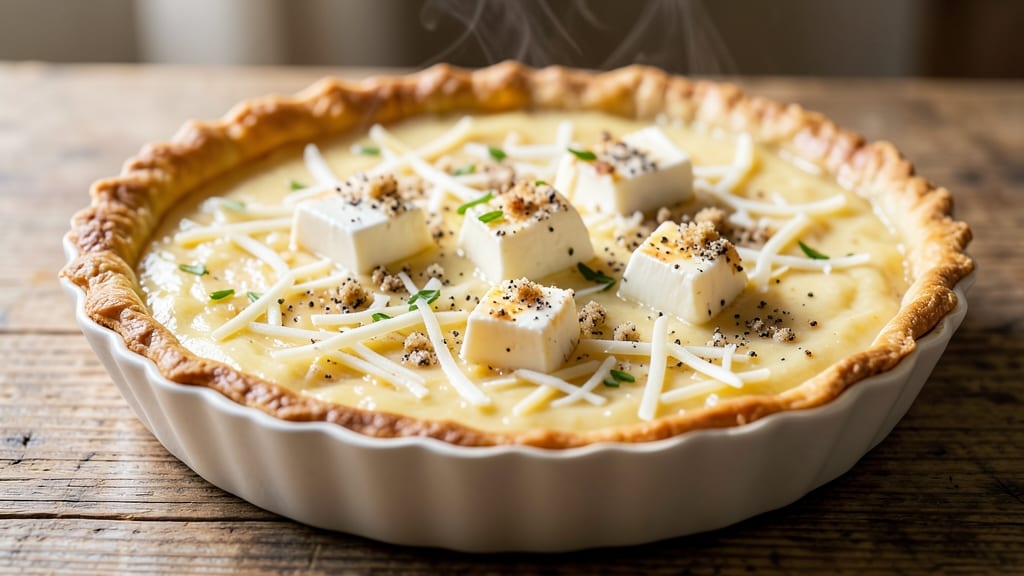
This three-cheese quiche recipe delivers the perfect balance of a flaky crust and three layers of melted cheeses—creamy, rich, and impossible to resist. The secret lies in a precise method that ensures the crust stays crisp while the filling remains velvety, with cheeses melting into distinct yet harmonious layers.
I’ve perfected this technique over years of testing, and the result is a quiche that feels like a restaurant-quality breakfast without the fuss.
The foundation starts with a classic pie crust, pre-baked to golden perfection before adding the egg mixture. Three complementary cheeses—sharp cheddar, Gruyère for nutty depth, and cream cheese for creaminess—create texture and flavor complexity.
The egg custard binds everything together, yielding a filling that’s both rich and light, with each bite offering a different cheese experience. This recipe is designed to impress, whether you’re serving it for brunch or a special weekend breakfast.
What sets this quiche apart is the attention to detail—from the blind-baked crust to the precise cheese layering technique. The filling bakes up with a slightly jiggly center, ensuring it’s creamy when cut into, while the crust remains perfectly crisp.
Optional additions like spinach, bacon, or fresh herbs can customize it to your taste, but the core recipe stands strong on its own. It’s the kind of dish that makes mornings feel like an occasion.
Ready in about 45 minutes with minimal hands-on time, this quiche is ideal for meal prep or last-minute gatherings. The crust is foolproof, and the filling technique ensures no soggy bottoms or dry edges.
Whether you’re a seasoned baker or new to quiches, this recipe delivers restaurant-quality results every time. Let’s get started on creating your perfect three-cheese masterpiece.
Ingredients for three cheese quiche
Six essential ingredients for a restaurant-quality quiche with three perfect cheese layers.
| Ingredient | Amount | Notes |
|---|---|---|
| Unsalted Butter 🧈 | 1 cup | Cold, cubed for crust |
| All-Purpose Flour 🌾 | 2 ½ cups | Plus 2 tbsp for dusting |
| Ice Cubes ❄️ | ½ cup | For chilled dough |
| Large Eggs 🥚 | 4 whole | Room temperature |
| Heavy Cream 🥛 | 1 cup | Full-fat for richness |
| Sharp White Cheddar Cheese 🧀 | 6 oz | Shredded, aged 6 months |
| Gruyère Cheese 🧀 | 6 oz | Shredded, nutty flavor |
| Cream Cheese 🧀 | 8 oz | Room temperature |
| Diamond Crystal Kosher Salt 🧂 | 1 ½ tsp | Fine grain preferred |
| Freshly Ground Black Pepper 🌶️ | ½ tsp | Cracked peppercorns |
| Nutmeg 🌿 | ¼ tsp | Freshly grated |
| Extra-Virgin Olive Oil 🫒 | 1 tbsp | For brushing crust |
The cheese selection is non-negotiable for this recipe. Gruyère from a specialty cheese shop—look for blocks with natural rind—adds the nutty depth that separates this from basic quiches. Sharp white cheddar should be aged at least 6 months for proper tang, while the cream cheese needs to be full-fat for that velvety texture. I source my Gruyère from Murray's Cheese in New York, but Whole Foods or Local cheese counters carry reliable options. For the crust, Baking & Wilton brand flour works best due to its protein balance, but any all-purpose will suffice if you're in a pinch.
No Gruyère? Comté cheese is the closest substitute, though it lacks the same melt. Sharp cheddar can be swapped for Parmigiano-Reggiano at half the quantity for a different flavor profile. The cream cheese must remain full-fat—Neufchâtel works if you're avoiding dairy fat, but the texture will differ. For the crust, if you're short on butter, vegetable shortening can be used at a 1:1 ratio, though purists will detect the difference. The key is maintaining the cheese-to-egg ratio—never exceed 1 cup of shredded cheese per 4 eggs to avoid a greasy filling.
This quiche reheats beautifully—350°F for 15 minutes restores its glory. Store the assembled quiche (unbaked) in the fridge for up to 24 hours before baking. Once baked, it keeps 4 days in the refrigerator, though I recommend eating it within 2 days for optimal texture. For meal prep, portion into individual servings and freeze for up to 3 months. Reheat frozen portions directly from frozen at 325°F for 30-40 minutes covered with foil.
Why You'll Love This Recipe
- No-Fuss Crust: I swear by the ice-cold butter trick—just pulse it with flour until it mimics breadcrumbs. No rolling pin, no stress, and that buttery crust still comes out golden and sturdy. (Yes, even if my hands are covered in egg.)
- Triple Cheese Magic: Sharp cheddar, creamy gruyère, and a hint of brie—this combo melts into a silky, tangy filling that doesn’t scream "quiche." The heavy cream keeps it rich without being heavy, and the eggs? Perfectly set, not rubbery.
- Brunch or Dinner: Same recipe, two vibes. Serve it warm with toast for a lazy Sunday, or slice it cold for a weeknight lunch. Honestly, I’ve even packed it in my kid’s school lunchbox—no one complained.
- Leftovers on Lock: Bakes in 35 minutes, reheats in 10. The crust stays crisp, the filling stays creamy, and it’s still delicious the third day. (Between us, I’ve had it for breakfast, dinner, and a midnight snack—no judgment.)
Step-by-step instructions for three cheese quiche
Mastering the perfect quiche starts with a flaky crust and precise technique—here's how to achieve both.
Prepare the Flaky Crust
In a food processor, combine the 1 cup unsalted butter (cold and cubed) with the 2.5 cups all-purpose flour and 1.5 teaspoons diamond crystal kosher salt. Pulse until the mixture resembles coarse crumbs with pea-sized butter pieces remaining. Avoid over-processing or the crust will become tough.
Add the 0.5 cup ice cubes and pulse just until the dough begins to clump together. The ice helps develop gluten while keeping the butter cold for maximum flakiness. Transfer the dough to a lightly floured surface and gently press it into a 12-inch round using your fingertips. Wrap in plastic and refrigerate for at least 1 hour—this resting period is critical for preventing shrinking during baking.
Preheat your oven to 375°F. Roll out the chilled dough on a floured surface to 1/8-inch thickness. Transfer it to a 9-inch pie dish and press gently into the bottom and up the sides. Trim excess dough, leaving a 1/2-inch overhang. Prick the base with a fork and line with parchment paper, filling it with pie weights or dried beans. Bake for 15 minutes until the edges begin to golden. Remove the weights and bake an additional 5 minutes until the crust is fully set but still pale—this prevents over-browning during the filling stage.
Create the Three-Cheese Filling
In a medium bowl, whisk together the 4 whole large eggs (room temperature) and 1 cup heavy cream until just combined. Add the 6 ounces sharp white cheddar cheese, 6 ounces gruyère cheese, and 8 ounces cream cheese, shredded, along with the 0.5 teaspoon freshly ground black pepper and 0.25 teaspoon nutmeg. Mix until the cheeses are fully incorporated and the filling is smooth. The texture should be thick but pourable—this ensures even distribution in the crust.
Brush the pre-baked crust with 1 tablespoon extra-virgin olive oil to create a barrier between the filling and crust. This prevents sogginess and enhances browning. Pour the cheese mixture evenly into the crust, using a spatula to spread it into an even layer. The filling should reach about 3/4-inch deep—this depth allows for proper cooking without overflowing.
Bake to Golden Perfection
Return the quiche to the 375°F oven and bake for 35-40 minutes until the top is golden brown and the center is just set. You'll know it's ready when the filling no longer jiggles slightly in the center and the edges pull away from the crust. Avoid over-baking—quiche continues cooking slightly after removal from the oven, and over-baking leads to dryness.
Let the quiche rest for 10 minutes before slicing. This allows the filling to set properly and prevents it from running when you cut into it. Serve warm or at room temperature for the best texture. The sharp white cheddar provides a tangy bite, the gruyère adds nutty depth, and the cream cheese creates a luxurious creaminess in every bite.
Optional Crispy Top (For Extra Flavor)
For an enhanced crust, sprinkle 1/4 cup grated gruyère cheese over the filling during the final 5 minutes of baking. The cheese will melt into a golden, bubbly topping that adds texture and flavor. This step is optional but recommended for that restaurant-quality finish. The cheese should be evenly distributed and begin to bubble before the quiche is fully baked.
If you prefer a different cheese ratio, adjust the amounts while maintaining the total 20 ounces of cheese. For example, you could substitute 4 ounces of the gruyère with 4 ounces of fontina for a sweeter flavor profile. Always ensure the filling remains thick enough to hold its shape during baking.
Pro Tips For Making Three Cheese Quiche
- Chill the Dough First: Roll out that butter-flour mix between two sheets of parchment—yes, it’s extra work, but it keeps the crust from shrinking like a sad, greasy puddle. I learned this the hard way when my first quiche looked more like a pie with a bellyache.
- Cut Butter in Cold: Use ice cubes to keep your butter cold while mixing with flour—no, your hands won’t freeze, but the dough will stay firm and flaky. I was skeptical until I tried it; now I never go back to room-temperature butter.
- Prevent a Soggy Bottom: Blind-bake the crust for 10 minutes before adding the filling—skip this, and you’ll end up with a sad, watery base. Works even better if you sprinkle a pinch of flour in the crust before baking.
- Whisk Eggs Like You Mean It: Beat those eggs and cream until the mixture is actually smooth—no lumps, no excuses. I used to rush it, and the quiche always tasted uneven. Five minutes with a whisk makes a real difference.
Storing and reheating this dish
Refrigerator Storage
The assembled quiche (unbaked) keeps beautifully in the fridge for up to 24 hours before baking. Once baked, store it in an airtight container for 4 days—I use glass Pyrex with snap-on lids to maintain freshness. The crust stays crisp, and the filling remains creamy when reheated properly. 🧀
Freezer Prep Tips
For long-term storage, portion the baked quiche into individual slices and freeze them in single-serving portions wrapped tightly in plastic wrap. This prevents freezer burn and makes reheating easier. Store for up to 3 months at 0°F or below. I recommend using quart-sized freezer bags for larger portions.
Reheating Perfection
To restore your quiche to its golden glory, preheat your oven to 350°F. Place the refrigerated quiche on a baking sheet and reheat for 15-20 minutes until the filling is warm and the crust is crisp again.
For frozen portions, bake at 325°F for 30-40 minutes, covering with foil during the first 20 minutes to prevent over-browning.
Microwave Shortcut
When time is tight, microwave individual slices covered with a damp paper towel on 50% power for 1-2 minutes. This method preserves some of the filling's creaminess but won't restore the crust's crispness.
I only use this for quick lunches when I'm in a hurry—it's not ideal for brunch guests. 🍽️
Reviving Soggy Crusts
If your reheated quiche has a slightly soggy bottom, don't worry—it's fixable! Place the quiche under a broiler for 2-3 minutes to crisp the crust. This works especially well for slices that have been refrigerated or frozen. Just keep an eye on it to avoid burning the cheese on top.
Cheese Layer Trick
For maximum flavor retention, store the quiche with the crust side down in the fridge or freezer. This protects the delicate cheese layers from absorbing refrigerator odors and keeps the filling more cohesive when reheated. The cheese-to-egg ratio remains stable, ensuring that creamy texture you love. 💫
Nutrition facts
Frequently asked questions
Can I make this quiche ahead of time?
The unbaked quiche keeps in the fridge for 24 hours before baking. Once baked, store it in an airtight container for 4 days—the crust stays crisp and filling remains creamy. For meal prep, freeze individual slices for up to 3 months. Reheat frozen portions at 325°F for 30-40 minutes covered with foil.
What's the best way to substitute cheeses?
Keep the total cheese at 20 ounces for proper texture. Swap Gruyère for Comté (nutty but less melty) or fontina (sweeter). Replace sharp cheddar with Parmigiano-Reggiano (½ quantity) for a different profile. Always use full-fat cream cheese—low-fat versions won't melt properly.
Why did my crust turn soggy?
Most likely, the filling was too wet or the crust wasn't pre-baked enough. Always blind-bake the crust for 20 minutes at 375°F with weights, then brush with olive oil before adding filling. If it happens after baking, revive it under the broiler for 2-3 minutes to crisp the bottom.
Can I add spinach or bacon?
Yes! Sauté 2 cups chopped spinach until wilted and mix into the filling (reduce cream cheese to 6 ounces to balance moisture). For bacon, cook 4 slices crispy and layer half on the crust before adding filling. Both additions work best when pre-cooked to avoid excess moisture.
How do I know when the quiche is fully cooked?
The center should be just set—no jiggle when gently shaken. The top will be golden brown and edges pull away from the crust. A toothpick inserted should come out clean or with a few moist crumbs (not wet egg). Overbaking dries out the filling, so pull it when it's just done.