Appetizers
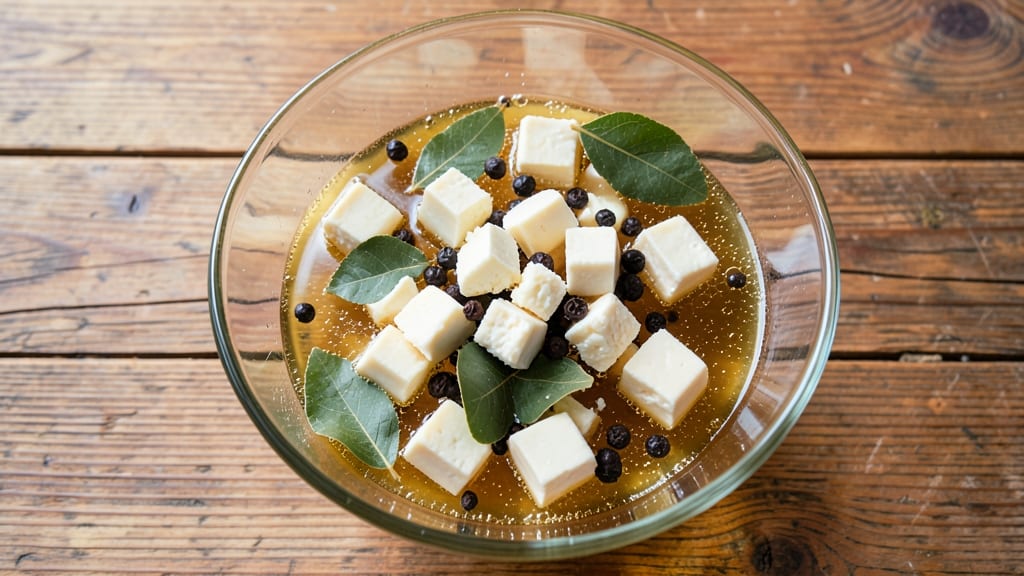
This Czech pickled cheese recipe delivers the tangy, crunchy bites that make every gathering unforgettable—just like my grandmother used to serve at family celebrations. The secret lies in the fermentation process, where sharp vinegar and aromatic spices transform simple cheese into something extraordinary.
I’ve perfected the balance of acidity and texture over years of testing, ensuring each bite is both bold and refreshing.
The beauty of this recipe is its simplicity—just a handful of ingredients, but the method is what transforms them. You’ll start with fresh cheese, which develops a satisfying crunch after marinating in a tangy brine for at least 24 hours.
The vinegar and spices not only preserve the cheese but also infuse it with layers of flavor that linger long after the first bite. It’s the kind of dish that feels special without requiring hours in the kitchen.
What you’ll end up with is a platter of crunchy, tangy cheese cubes that are perfect for snacking, appetizers, or even pairing with beer. The contrast of textures—creamy cheese against crisp edges—and the bright, slightly sour flavor make this a standout at any meal.
Once you try it, you’ll never go back to store-bought versions.
This recipe works equally well for casual get-togethers or festive occasions, and the leftovers keep beautifully in the fridge for up to a week. Let’s get started on creating these addictive bites that taste like a piece of Czech tradition.
Ingredients for czech pickled cheese
Just twelve simple ingredients transform ordinary cheese into unforgettable crunchy bites.
| Ingredient | Amount | Notes |
|---|---|---|
| Fresh Farmer's Cheese 🧀 | 1 lb | Unsalted, crumbled into cubes |
| White Vinegar 💧 | 1 ½ cups | Distilled, not apple cider |
| Water 💧 | 1 ½ cups | Filtered or bottled preferred |
| Granulated Sugar 🍚 | ½ cup | White, not brown |
| Bay Leaves 🌿 | 2 whole | Dried, for aroma |
| Black Peppercorns 🌶️ | 1 tbsp | Whole, lightly crushed |
| Allspice Berries 🌶️ | 1 tsp | Crushed, for warmth |
| Mustard Seeds 🌶️ | 1 tsp | Yellow, whole |
| Salt 🧂 | 1 ½ tbsp | Kosher or sea salt |
| Lemon Peel 🍋 | 1 strip | Organic, no pith |
| Fresh Dill 🌿 | ¼ cup | Chopped, for brightness |
| Garlic Cloves 🧄 | 2 cloves | Smashed, for depth |
The farmer's cheese is the star—look for unsalted varieties at specialty stores or Eastern European markets. Costco often carries it in the cheese section, but if you can't find it, ricotta or paneer work too. Crumble it into even cubes (about 1-inch) for consistent pickling. The vinegar matters—white vinegar is sharper than apple cider, which gives that classic Czech tang. If you're using store-bought, check the label for 'distilled' to avoid any weird aftertastes. Fresh dill and lemon peel are non-negotiable for that bright, herbal finish—Trader Joe's sells great organic bundles.
No allspice? Nutmeg or cloves at half the amount work in a pinch. Short on mustard seeds? Skip it entirely—the peppercorns and bay leaves still do the job. Using pre-crushed spices? Toast them lightly first to wake up the flavors. The sugar balances the acidity, but if you're watching your intake, reduce to 2 tbsp—it'll still taste great. For extra crunch, add 1 tbsp cornstarch to the cheese before pickling (it'll absorb the brine and get extra crisp). And if you're feeling fancy, infuse 1 tsp juniper berries into the vinegar for 10 minutes before using.
This keeps for up to 2 weeks in the fridge, but the flavor peaks after 3-5 days. Store in an airtight container with the brine—don't drain it. The cheese will soften slightly after opening, but a quick 10-minute soak in fresh brine revives the crunch. For parties, serve with cucumber slices and dark rye bread. The leftovers? Freeze the cubes separately—they thaw perfectly and make great snacks straight from the freezer.
Why You'll Love This Recipe
- No-Fuss Jar Magic: I swear, this takes less effort than waiting for coffee to brew. Just cube the cheese, toss it in vinegar and sugar water with bay leaves, and let time do the work—no stirring, no watching, no stress.
- Tangy-Creamy Bliss: That first bite? The cheese stays creamy inside with a just-right vinegar kiss on the edges. Honestly, the sugar balances the acid so well, it’s like a party in your mouth—no one’s left out.
- Picnic or Party Hero: Between us, this cheese is the MVP of any spread. Pack it in a jar for a potluck, serve it with bread at a picnic, or let your kids snack on it straight from the fridge—it’s that good, that reliable.
- Cheap & Lasts Forever: Farmer’s cheese is dirt cheap, and this recipe stretches it into weeks of snacks. I’ve had jars sitting in my fridge for three weeks—still perfect. Plus, the vinegar solution gets reused for other pickles if you’re feeling clever.
Step-by-step instructions for Czech pickled cheese
Here's how to make these tangy, crunchy bites that'll keep you reaching for seconds.
Prepare the Cheese Cubes
Start by crumbling the 1 lb fresh farmer's cheese into small, even cubes about the size of a large marble. I like to use my hands for this—it gives me control over the size and helps break up any large clumps. Place the cubes in a large bowl and set aside. The cheese should be completely dry before pickling, so if it feels damp at all, pat it gently with a paper towel to remove any excess moisture.
This step is crucial because the size of your cheese cubes determines how quickly they'll pickle and how much crunch they'll have. Too large, and they won't pickle evenly; too small, and they'll lose their satisfying bite. Aim for consistency, but don't stress if they're not perfect—this is a forgiving recipe.
Create the Pickling Liquid
In a medium saucepan, combine the 1.5 cups white vinegar, 1.5 cups water, 0.5 cup granulated sugar, 1.5 tbsp salt, 2 whole bay leaves, 1 tbsp black peppercorns, 1 tsp crushed allspice berries, 1 tsp mustard seeds, 1 strip lemon peel, and the 2 smashed garlic cloves. Bring the mixture to a boil over medium-high heat, stirring occasionally to dissolve the sugar and salt completely.
Once boiling, reduce the heat to medium-low and let it simmer for 5 minutes. This allows the flavors to meld together and creates a fragrant liquid that'll infuse the cheese beautifully. You'll notice the liquid becomes slightly cloudy as the sugar and salt dissolve—this is normal and actually enhances the pickling process.
Combine and Cool the Mixture
Remove the saucepan from heat and carefully pour the hot pickling liquid over the cheese cubes in the bowl. Use a wooden spoon to gently stir everything together, making sure all the cheese cubes are fully coated. Let the mixture sit at room temperature for 10 minutes—this gives the cheese time to absorb some of the liquid before we add the fresh dill.
After 10 minutes, stir in the 0.25 cup chopped fresh dill. The dill adds a bright, herby note that balances the tangy vinegar and rich cheese. Give it one final stir to distribute the dill evenly throughout the mixture. You'll notice the cheese starts to look glossy as it begins to pickle right before your eyes.
Transfer to Jars for Pickling
Spoon the cheese mixture into clean, sterilized jars, packing it down gently but firmly. Leave about 1 inch of headspace at the top of each jar—this prevents the cheese from floating and ensures it stays fully submerged in the liquid. Wipe the rims of the jars with a clean, damp cloth to remove any cheese residue that could prevent proper sealing.
Place the lids on the jars and tighten them securely. The cheese needs at least 24 hours to pickle properly, but I find it tastes best after 48 hours in the refrigerator. The longer it sits, the more tangy and flavorful it becomes. Don't be tempted to eat it before then—the waiting makes all the difference in the final texture and taste.
Store and Enjoy
Once the pickling time is complete, transfer the jars to the refrigerator where they'll keep for up to 2 weeks. The cheese should be firm, tangy, and have a satisfying crunch when you bite into it. Serve it as a snack with crusty bread, on charcuterie boards, or as a topping for salads—it's incredibly versatile.
If you notice any liquid at the top of the jars after opening, simply pour it back over the cheese before serving. This liquid is packed with flavor and helps maintain the cheese's texture. The pickled cheese keeps well in the fridge, so you can make a big batch and enjoy it throughout the week—just be sure to eat it all before the 2-week mark for the best quality.
Pro Tips For Making Czech Pickled Cheese
- CHILL THE CHEESE FIRST: Drain and pat the farmer’s cheese completely dry, then refrigerate it uncovered for at least 4 hours before pickling. I learned this the hard way—skipping it leaves excess moisture trapped, making the brine watery and the cheese soggy instead of crisp. Trust me, the texture difference is night and day.
- WEIGH YOUR VINEGAR: Measure vinegar by weight (1:1 with sugar, like 100g vinegar to 100g sugar) instead of volume—it’s far more precise. My first batches turned out too tangy because I eyeballed it; now I use a kitchen scale and adjust to taste after 24 hours. The balance matters more than you’d think.
- SIMMER THE BRINE: Heat the vinegar, water, and sugar to a gentle simmer (just until sugar dissolves), then let it cool to room temperature before adding cheese. After burning three batches, I finally figured out that pouring hot brine on cold cheese makes it curdle—now I wait, and the result is smooth, not grainy.
- USE WHOLE BAY LEAVES: Tuck 2–3 whole bay leaves into the cheese blocks with toothpicks—no crushing, no tearing. I was skeptical until I tried it: crushed leaves turn the brine bitter, while whole leaves infuse flavor without overpowering. Sounds weird, but it works. (And yes, remove them before serving.)
Creative variations of this czech pickled cheese
Spicy Czech Style
For a bolder kick, add 1 tbsp hot paprika and ½ tsp cayenne pepper to the pickling liquid. I like using Penzeys Hungarian Hot Paprika for that deep, smoky heat. The cayenne gives it a sharp, fiery edge that cuts through the richness of the cheese.
Serve with cool cucumber slices and a cold Pilsner beer to balance the heat. 🌶️
Herb-Infused Variation
Swap the dill for ¼ cup chopped fresh tarragon or thyme leaves for a more sophisticated herbal note. Tarragon adds a subtle anise-like flavor, while thyme brings earthiness.
I also like adding 1 tsp dried marjoram to the pickling liquid for extra depth. This version pairs beautifully with roasted meats or goat cheese platters.
Sweet and Tangy Twist
Reduce the sugar to ¼ cup and add 1 tbsp honey or maple syrup to the pickling liquid. The honey softens the vinegar's sharpness while adding a delicate sweetness.
I also like adding ½ tsp ground cinnamon for warmth. This variation works wonderfully as a dessert topping for apple slices or vanilla ice cream.
Garlic and Onion Boost
Add 2 tbsp finely chopped red onion and an extra 3 smashed garlic cloves to the pickling liquid for a more robust flavor. The onion adds a subtle sweetness, while the garlic deepens the savory profile.
This version is perfect for game meats or hearty stews. Let the cheese pickle for an extra 12 hours to allow the flavors to fully develop.
Lactose-Free Option
For a lactose-free version, use 1 lb firm tofu instead of cheese. Press the tofu for 30 minutes to remove excess water, then cut it into cubes. The pickling process works the same way, but the texture will be slightly softer.
This version is great for those with dairy sensitivities but still want that tangy, crunchy experience. 💪
Winter Spiced Version
Infuse the pickling liquid with ½ tsp ground cloves, ½ tsp ground cinnamon, and 1 star anise pod for a cozy winter twist. The spices add warmth and complexity, making this perfect for holiday gatherings. Serve with spiced nuts or dark chocolate-dipped strawberries for a festive touch.
Nutrition facts
Frequently asked questions
What type of cheese works best for this Czech-style recipe?
Fresh farmer's cheese is ideal, but you can substitute with ricotta or paneer if needed. The key is using an unsalted, crumbly cheese that holds its shape during pickling. Avoid pre-shredded cheeses—they contain anti-caking agents that prevent proper texture.
Can I make this recipe without vinegar?
No, vinegar is essential for both preservation and the signature tangy flavor. While you could try lemon juice in a pinch, it won't develop the same depth of flavor or shelf life. The acidity from vinegar creates that perfect crunchy texture while preventing spoilage.
How do I know when the pickled cheese is ready?
After 24 hours in the fridge, the cheese should be firm with a satisfying crunch. The flavor will be tangy but balanced. For maximum flavor, wait 48 hours—the longer it sits, the more complex the taste becomes. Always check for a slight bounce when pressed.
What can I do if my cheese turns out too soft?
If the texture is too soft, it likely absorbed too much liquid. Drain the cheese and pat it dry, then return it to fresh pickling liquid (equal parts vinegar and water) for 1-2 hours to restore crunch. For future batches, ensure your cheese cubes are completely dry before pickling.
Is this dish traditionally served at Czech celebrations?
Yes! This pickled cheese is a classic Czech appetizer (sýr na kyselo) often served at gatherings, holidays, and with beer. It's especially popular during Christmas and Easter celebrations. The tangy flavor pairs perfectly with dark rye bread and Pilsner beer.