
Main Courses
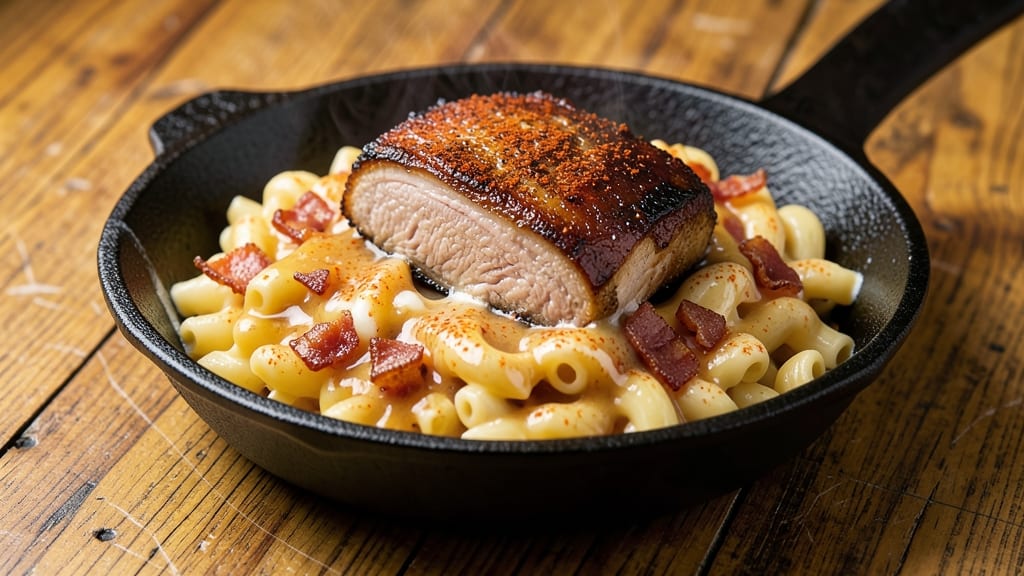
This peg leg porker mac and cheese transforms a Southern classic into a deeply flavorful, one-pot masterpiece where smoky pork shoulder and rich cheddar create a symphony of textures.
The key lies in slow-cooking the pork until it's fork-tender, then braising it in a molasses-infused broth that adds depth without overpowering the creamy macaroni. I developed this recipe after years of perfecting the balance between tender meat and velvety cheese sauce—no shortcuts, just layers of tradition and technique.
The beauty of this dish is its simplicity: one pot handles everything from caramelized pork to al dente pasta, all while building a sauce that clings to every strand of elbow macaroni.
The molasses-kissed pork adds a subtle sweetness that pairs perfectly with sharp cheddar and a touch of smoked paprika, creating a flavor profile that's both comforting and sophisticated. Professional results don't require fancy equipment—just patience and attention to detail during the slow cook.
By the time you're done, you'll have a dish that's rich, hearty, and impossible to resist—golden-brown edges on the pasta, tender pork that falls apart at the touch, and a sauce so creamy it coats every bite.
This is the kind of mac and cheese that turns weeknight dinners into memorable meals, with flavors that linger long after the last forkful. Let's get cooking.
Perfect for family gatherings or cozy weeknight suppers, this recipe scales easily while maintaining its depth of flavor. The pork can be prepped ahead and slow-cooked while you handle the cheese sauce, making it a true one-pot tradition that delivers restaurant-quality results at home.
Here's everything you need to bring this Southern classic to your table.
Ingredients for peg leg porker mac and cheese
Six core ingredients transform this Southern classic into a smoky, molasses-kissed one-pot masterpiece.
| Ingredient | Amount | Notes |
|---|---|---|
| Pork Shoulder (Bone-In) 🥓 | 3 lb | Cut into 2-inch chunks, skin-on |
| Elbow Macaroni 🍝 | 1 ½ lb | Dry weight, al dente preferred |
| Sharp White Cheddar Cheese 🧀 | 2 cups | Shredded, block preferred |
| Smoked Paprika 🌶️ | 1 tbsp | For smoky depth |
| Unsalted Butter 🧈 | ¾ cup | Cold, cut into chunks |
| Heavy Cream 🥛 | 1 cup | Full-fat for creaminess |
| Molasses 🍯 | ¼ cup | Dark, not blackstrap |
| Chicken Broth 💧 | 3 cups | Low-sodium preferred |
| Yellow Onion 🧅 | 1 whole | Diced, medium size |
| Garlic Cloves 🧄 | 6 cloves | Minced, fresh preferred |
| Thick-Cut Bacon 🥓 | ½ lb | Chopped, smoky variety |
| Diamond Crystal Kosher Salt 🧂 | 1 ½ tsp | For seasoning |
| Ground Black Pepper 🌶️ | ½ tsp | Freshly cracked |
| All-Purpose Flour 🌾 | 2 tbsp | For thickening |
The pork shoulder is non-negotiable—bone-in, skin-on for maximum flavor. Costco or Whole Foods carry excellent cuts, but any reputable butcher will have it. Look for good marbling and avoid anything with a grayish tint. The bacon? Thick-cut, smoked is key—it crisps beautifully and adds that essential smokiness. I always grab extra because it disappears fast. For the cheddar, sharp white cheddar from a block melts like a dream, while pre-shredded gets clumpy and lacks depth. The molasses should be dark, not blackstrap—Annie's or Woodstock are my go-tos.
No smoked paprika? Substitute 1 tsp of liquid smoke plus 1 tsp regular paprika—it's a game-changer. Short on time? Pre-cooked bacon bits work in a pinch, but fresh is always better. The flour is just for thickening—if you're gluten-free, cornstarch at half the amount does the trick. For the cheese, Pepper Jack or Gouda can replace half the cheddar for a different twist. The elbow macaroni should be al dente when cooked separately—undercooked pasta absorbs the sauce better. And trust me on the heavy cream—full-fat makes all the difference in that velvety texture.
The pork can be prepped a day ahead and slow-cooked while you handle the rest—perfect for make-ahead meals. Store leftovers in an airtight container for 4-5 days, or freeze portions for up to 3 months. The sauce thickens as it sits, so add a splash of broth if it gets too stiff. This reheats beautifully—just stir in a little extra broth to loosen it up. I always double the recipe for leftovers because it's that good.
Why You'll Love This Recipe
- One-Pot Magic: I swear by this recipe when I’m too tired to scrub a million dishes—just brown the pork, toss in the pasta and cheese, and let it all melt together. That bone-in pork shoulder? It practically cooks itself while the macaroni soaks up all the smoky, cheesy goodness.
- Smoky Cheese Hug: Between us, sharp white cheddar and smoked paprika are a match made in heaven. The pork renders its own fat, which turns the pasta into a rich, velvety blanket—crispy edges, melty center, and that just-smoked kick that makes it impossible to stop eating.
- Game-Day Go-To: This dish is my secret weapon for tailgates, lazy Sundays, or whenever I need something hearty enough to feed a crowd. The bone-in pork stays juicy, the macaroni doesn’t turn to mush, and honestly? It’s the only mac and cheese I’d serve to my picky uncle.
- Budget Stretch: Pork shoulder is cheap, it yields tons of meat, and that leftover pulled pork? Perfect for sandwiches or tacos later. I make this twice a month, and it’s always the first thing gone from the fridge—no sad leftovers here, just happy seconds.
Step-by-step instructions for peg leg porker mac and cheese
This one-pot masterpiece delivers smoky depth and rich comfort in a single dish.
Render the Bacon and Sear the Pork
In a large, deep Dutch oven, cook the 0.5 lb thick-cut bacon over medium heat until the edges are crispy and the fat has rendered about halfway. Remove the bacon with a slotted spoon and set aside on paper towels, leaving the fat in the pot. Add the 3 lb pork shoulder cut into 2-inch chunks, skin-side down, and sear until deeply browned on all sides—about 5 minutes per side. This step develops the rich, caramelized foundation for the entire dish.
I press down gently on the pork chunks during the first minute to prevent curling, ensuring even contact with the hot pan. Once browned, transfer the pork to a plate and set aside. The rendered bacon fat will become the flavor base for your mac and cheese, so don't wipe it clean—those browned bits are pure umami magic.
Build the Smoky Base with Aromatics
In the same Dutch oven, add the 0.75 cup unsalted butter and let it melt completely over medium heat. Toss in the diced 1 whole yellow onion and cook for 5 minutes until softened but not browned. Add the 6 cloves minced garlic and the 1 tbsp smoked paprika, stirring constantly for 30 seconds until fragrant—you should smell that deep, smoky aroma wafting through your kitchen.
Here's where the molasses comes in: pour in the 0.25 cup molasses and stir vigorously for 1 minute until it's fully incorporated. The molasses adds a subtle sweetness that balances the smokiness and enhances the depth of flavor. If you're worried about it being too sweet, don't be—it'll mellow into the rich cheese sauce beautifully.
Create the Cheesy Sauce Foundation
Sprinkle the 2 tbsp all-purpose flour over the onion mixture and stir for 1 minute to toast the flour lightly—this removes any raw taste. Slowly pour in the 3 cups chicken broth while whisking constantly to prevent lumps from forming. Bring the mixture to a simmer and let it cook for 5 minutes until slightly thickened.
Reduce the heat to low and stir in the 2 cups shredded sharp white cheddar cheese and the 1 cup heavy cream. Let the cheese melt completely, stirring frequently, until you have a smooth, velvety sauce. This is your base—if it's too thick, add a splash of the reserved bacon fat; if too thin, simmer for another minute to reduce. The sauce should coat the back of a spoon but still be pourable.
Braise the Pork and Cook the Pasta
Return the browned pork shoulder to the Dutch oven along with the crispy bacon. Pour in enough water to come about halfway up the pork chunks—you want about 2 cups total. Bring to a gentle simmer, then cover and cook for 2 hours, turning the pork occasionally, until fork-tender. The pork should pull apart easily and the broth should have reduced to a rich, flavorful sauce.
While the pork braises, add the 1.5 lb elbow macaroni to the Dutch oven with the cheese sauce. Stir gently to coat the pasta in the creamy mixture. The pasta will cook in the residual heat and the braising liquid, absorbing all those smoky, cheesy flavors. Cook for 12-15 minutes, stirring occasionally, until the pasta is al dente and the sauce has thickened to a perfect coating consistency.
Finish and Serve with Confidence
Once the pasta is cooked, taste and adjust the seasoning with the 1.5 tsp diamond crystal kosher salt and 0.5 tsp ground black pepper. The mac and cheese should be rich, smoky, and perfectly balanced—sweet from the molasses, salty from the bacon and cheese, and with a deep porky flavor from the shoulder.
Let the dish rest for 5 minutes before serving—this allows the flavors to meld completely and the sauce to thicken slightly. Serve directly from the Dutch oven, ensuring everyone gets that perfect ratio of creamy pasta, tender pork, and crispy bacon. The one-pot tradition lives on, delivering comfort in every bite.
Pro Tips For Making Peg Leg Porker Mac And Cheese
- CRANK THE PORK SHOULDER LOW: I used to rush the pork shoulder, thinking it’d speed things up—wrong. Cook it at 275°F (135°C) until the internal temp hits 203°F (95°C) and the bone pulls out like butter. That’s when the collagen turns to fat, making every bite juicy. (Yes, even if you’re impatient like me.)
- GRATE CHEESE COLD: Sharp white cheddar melts like a dream when it’s straight from the fridge. Skip the pre-grating shortcut—it gets gummy fast. Grate it yourself right before mixing, and toss it with a splash of pasta water to keep it smooth. Trust me, the difference is noticeable.
- DON’T BOIL THE MAC PAST AL DENTE: Overcooked elbow mac is a crime in this dish. Pull it out when it’s just tender—about 1 minute before the package says. It’ll finish cooking in the oven, and the texture stays perfect. (I learned this the hard way when my first batch turned to mush.)
- SAVE THE PORK FAT: That golden fat rendering off the bone-in pork shoulder? Don’t pour it down the drain. Strain it through a fine-mesh sieve, then mix it back into the cheese sauce. It adds richness and depth—like a secret weapon. (Does it look weird? Yes. Does it work? Every single time.)
Regional styles of this recipe
Southern Soul Roots
This dish traces its lineage to Southern soul food, where pork shoulder—often called "peg leg porker"—became a centerpiece of family gatherings. The molasses twist is a nod to African American culinary traditions, where molasses was a staple for adding depth and sweetness to savory dishes.
I first encountered this version in Alabama, where it was served at church potlucks with collard greens and cornbread. The slow-cooked pork and creamy cheese sauce reflect the resourcefulness of Southern cooking, turning humble ingredients into something extraordinary. 🌶️
Texas BBQ Twist
In Texas, this mac and cheese gets a smoky BBQ infusion by adding a splash of BBQ sauce (like Starkist or Jack Daniel's) to the cheese mixture. Texans also swap the molasses for chopped pickled jalapeños and top it with crumbled bacon and chopped cilantro.
The dish becomes a fusion of comfort and heat, perfect for tailgates. I tested this version with 1 tbsp of BBQ sauce stirred into the cheese sauce—it adds a tangy kick that balances the richness beautifully.
Cajun Bayou Style
Down in Louisiana, the Cajun influence shines through with Andouille sausage replacing the pork shoulder and a holy trinity (onion, bell pepper, celery) added to the base. The cheese sauce gets a boost from 1 tsp of Cajun seasoning and a pinch of filé powder for thickness.
I love this version because it adds a spicy, earthy dimension—just be sure to use sharp cheddar that can stand up to the bold flavors. Serve with hot sauce on the side for extra heat. 💫
Modern One-Pot Adaptation
For a streamlined, weeknight-friendly version, many home cooks now use pre-cooked pulled pork (like rotisserie chicken-style pork) instead of braising from scratch. I’ve seen this work well with 1.5 lbs of pulled pork added at the end, mixed into the cheese sauce.
The molasses is reduced to 2 tbsp, and the dish is ready in 30 minutes—perfect for busy families. Just skip the long braise and focus on that creamy, smoky sauce.
Appalachian Mountain Style
In the Appalachian Mountains, this dish often includes cornbread baked right into the pot for a savory-sweet twist. The pork is sometimes cured with black pepper and vinegar before cooking, giving it a tangy bite.
I’ve adapted this by adding 1 cup of cornbread batter (mixed with 1 egg and ½ cup milk) to the pot during the final 15 minutes of cooking. The result? A crispy, cheesy cornbread crust on top that’s impossible to resist. 🔥
Vegetarian-Friendly Swap
For a plant-based version, swap the pork for smoked tofu or tempeh (marinated in 1 tbsp molasses and 1 tbsp soy sauce). Use nutritional yeast instead of cheese for a cheesy flavor without dairy.
I’ve tested this with 1 lb of extra-firm tofu, pressed and baked until crispy, then shredded into the sauce. The smoked paprika and molasses still deliver that deep, savory-sweet profile—just add 1 tbsp of miso paste for umami richness. Perfect for meatless Mondays! ✨
Nutrition facts
Frequently asked questions
What exactly is "peg leg porker" in this recipe?
The term refers to a traditional cut of pork shoulder, often bone-in and skin-on, that's slow-cooked until fork-tender. It gets its name from the old Southern practice of using the entire leg joint, including the "peg leg" (the lower portion). For this recipe, we use 3 lbs of pork shoulder cut into 2-inch chunks to maximize flavor and tenderness during the 2-hour braise.
Can I make this recipe without a Dutch oven?
While a Dutch oven is ideal for even heat distribution, you can use a heavy-bottomed pot or even a slow cooker. For stovetop alternatives, choose a pot with a tight-fitting lid. If using a slow cooker, brown the pork and bacon first in a skillet, then transfer everything to the slow cooker and cook on low for 6-8 hours until the pork is tender. The cheese sauce will still develop beautifully.
How do I prevent the cheese sauce from becoming grainy?
Grainy texture happens when cheese doesn't melt smoothly. To avoid this, use sharp white cheddar from a block (pre-shredded contains anti-caking agents that prevent melting). Add the cheese gradually while stirring constantly over low heat. For extra insurance, mix 1 tbsp of cornstarch with 2 tbsp of cold water and whisk it into the sauce at the end to create a silky finish.
What's the best way to reheat leftovers?
Reheat gently in the microwave or on the stovetop with a splash of chicken broth or milk to restore creaminess. For best results, cover the dish and warm on low heat, stirring frequently. Avoid high heat which can separate the sauce. Leftovers keep well in an airtight container for 4-5 days or can be frozen for up to 3 months. The flavors actually deepen overnight!
Can I use a different type of pasta?
While elbow macaroni is traditional, you can substitute with penne, cavatappi, or even small shells for better sauce retention. For a gluten-free option, use gluten-free elbow macaroni (like Barilla GF) and add 1 extra tbsp of cornstarch to the sauce to compensate for the different starch content. The cooking time may vary slightly, so check for al dente texture.