
Desserts
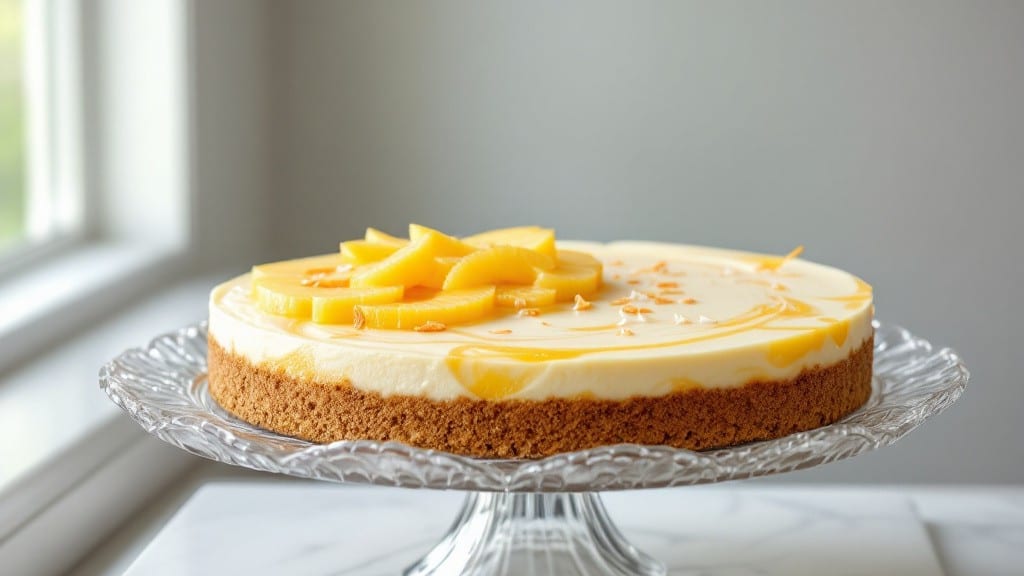
This Philadelphia cream cheese pineapple cheesecake recipe delivers the perfect balance of rich, creamy filling and tropical sweetness—with a crispy graham cracker crust that holds its shape.
The secret lies in blending smooth cream cheese with pineapple purée for a texture that's velvety yet light, while the water bath baking ensures a silky center that never cracks. I perfected this recipe after years of testing, and it's become a crowd-pleaser at every gathering.
The crispy graham crust forms the foundation, providing just the right contrast to the luscious filling. What sets this version apart is the pineapple—whether you use fresh purée or canned chunks, the tropical flavor cuts through the richness of the cream cheese.
The recipe includes a foolproof method for achieving that signature crack-free texture, even with the added moisture from the pineapple.
By the time it emerges from the oven, you'll have a cheesecake with a golden, crack-resistant top and a filling that's perfectly set—neither too firm nor too soft. The pineapple adds a subtle tang that brightens the sweetness, while the graham crust stays crispy even after cooling.
This is the kind of dessert that feels indulgent but still elegant enough for special occasions.
Serve it chilled with fresh berries, a drizzle of caramel, or a sprinkle of toasted coconut for extra flair. The recipe scales easily for parties, and leftovers keep beautifully in the fridge for up to five days. Let's get baking!
Ingredients for philadelphia cream cheese pineapple cheesecake
Rich cream cheese meets tropical pineapple in this velvety, crack-free masterpiece with a golden graham crust.
| Ingredient | Amount | Notes |
|---|---|---|
| Philadelphia Cream Cheese 🧀 | 16 oz | Full-fat, room temperature |
| Pineapple Purée 🍍 | 1 cup | Fresh or canned, unsweetened |
| Granulated Sugar 🍚 | 1 ½ cups | Superfine preferred for smoothness |
| Large Eggs 🥚 | 4 whole | Room temperature, separated |
| Sour Cream 🥛 | ½ cup | Full-fat, room temperature |
| Vanilla Extract 🍯 | 1 tbsp | Pure, high-quality extract |
| Graham Cracker Crumbs 🍪 | 2 cups | Fine, from 12 oz package |
| Unsalted Butter 🧈 | ½ cup | Melted, room temperature |
| Light Brown Sugar 🍚 | ¼ cup | Packed, for crust |
| Salt 🧂 | ½ tsp | Fine sea salt |
| Heavy Cream 🥛 | ½ cup | Cold, for water bath |
| Lemon Juice 🍋 | 1 tbsp | Freshly squeezed |
| Toasted Coconut Flakes 🥥 | ¼ cup | For garnish, optional |
The Philadelphia cream cheese is non-negotiable here—stick with full-fat for that signature silky texture. Trader Joe's or Wegmans carry the best quality blocks, and always let it sit at room temperature for at least 2 hours before mixing. For the pineapple purée, Dole or Del Monte unsweetened canned versions work perfectly, but fresh purée from a blender adds a brighter flavor. The graham crackers? Honey Maid or Annie's organic are my go-tos—they crush finer and hold their shape better than store-brand alternatives. Toast the coconut flakes in a dry pan for 2 minutes until fragrant; that extra step makes all the difference in the final presentation.
No pineapple purée? Blend canned pineapple chunks with a splash of water until smooth, then strain out the pulp. Running short on cream cheese? Substitute mascarpone cheese at the same weight, though the texture will be slightly denser. For the crust, butter-flavored shortening can replace butter if you're avoiding dairy, but the flavor won't be as rich. The lemon juice is key—freshly squeezed brightens the filling, but bottled works in a pinch. If you're scaling this up for a crowd, double the crust ingredients and press them into two 9-inch pans for even baking. The secret to the crack-free texture? Room-temperature eggs and a water bath—don't skip either step.
This cheesecake keeps beautifully in the fridge for up to 5 days, though it's best enjoyed within 3 days for optimal texture. For serving, let it sit at room temperature for 15-20 minutes before slicing—this prevents crumbling. The crust stays crispy when stored properly, but if it softens, rebake at 350°F for 5-7 minutes to restore crunch. Freeze individual slices between parchment paper for up to 2 months; thaw overnight in the fridge. The pineapple flavor intensifies slightly after chilling, so wait at least 4 hours before serving if possible. Garnish with toasted coconut just before serving to keep it looking fresh.
Why You'll Love This Recipe
- No Mixer Needed: I’ll be real—this cheesecake only needs a whisk and a bowl. The cream cheese and sour cream blend so smoothly by hand, and the pineapple purée cuts through the richness like a tropical breeze. (Yes, even on a Tuesday night.)
- Tropical Twist: That first bite of creamy Philadelphia cheesecake with the bright, jammy pineapple purée? It’s like dessert got a vacation. The sugar caramelizes just enough to balance the tang, and the eggs bind it all into something dangerously addictive.
- Party in a Bowl: This recipe doubles effortlessly—perfect for potlucks or when my book club votes "dessert" without a second thought. Serve it chilled with a sprinkle of toasted coconut, and suddenly you’re the hero who brought the only thing people actually eat.
- Leftovers That Win: Between us, this cheesecake tastes better the next day. The flavors meld into this perfect harmony, and slices reheat in 10 seconds. Plus, it’s cheaper than takeout—my wallet thanks me every time.
Step-by-step instructions for Philadelphia cream cheese pineapple cheesecake
Follow these precise steps to create a luscious pineapple cheesecake with a perfectly crispy graham crust.
Prepare the Graham Crust with Crispy Perfection
Preheat your oven to 350°F. In a medium bowl, combine the 2 cups graham cracker crumbs, 0.5 cup unsalted butter (melted and cooled slightly), 0.25 cup light brown sugar, and 0.5 tsp salt. Mix until the crumbs are evenly moistened and the mixture holds together when pressed.
Press the crumb mixture firmly and evenly into a 9-inch springform pan, creating an even layer at the bottom and up the sides. Use the back of a measuring cup to compact it tightly—this ensures a sturdy, crispy crust that won't crumble during baking. Bake for 10 minutes, then remove from the oven and let cool while you prepare the filling.
Blend the Pineapple Filling for Smooth Texture
In a separate bowl, whisk together the 1 cup pineapple purée, 1.5 cups granulated sugar, 1 tbsp vanilla extract, and 1 tbsp lemon juice until fully combined. Set this mixture aside—it will form the base of your cheesecake's signature tropical flavor.
In another bowl, beat the 16 oz Philadelphia cream cheese (at room temperature) until completely smooth, scraping down the sides of the bowl as needed. This step is critical—any lumps will result in a grainy texture. Gradually add the 0.5 cup sour cream and 4 whole large eggs, mixing just until incorporated after each addition.
Combine Filling Ingredients for Light, Airy Texture
Slowly pour the pineapple mixture into the cream cheese mixture while mixing on low speed. This gradual incorporation prevents the delicate cheesecake batter from becoming too dense. Add the 0.5 cup heavy cream and mix until just combined—overmixing introduces air, which can cause cracks during baking.
Pour the filling over the cooled graham crust, spreading it evenly with a spatula. Tap the pan gently on the counter to release any trapped air bubbles. The filling should settle about ½ inch below the pan's edge, leaving room for expansion. Place the pan in a larger baking dish and carefully pour hot water into the outer dish until it reaches halfway up the sides of the springform pan.
Bake with Precision for Silky Smoothness
Return the cheesecake to the oven and bake at 350°F for 50-55 minutes. The center should be slightly jiggly when gently shaken, but not liquid. Avoid opening the oven door during baking—this causes temperature fluctuations that can lead to cracks.
Once baked, turn off the oven and let the cheesecake cool inside with the door slightly ajar for 1 hour. This gradual cooling prevents sudden temperature changes. Remove from the water bath and cool completely at room temperature before refrigerating for at least 4 hours or overnight.
Garnish and Serve for Maximum Freshness
Before serving, run a knife around the edge of the springform pan to loosen the cheesecake. Top with 0.25 cup toasted coconut flakes for added texture and a tropical finish. Slice carefully with a warm knife for clean, perfect portions.
The cheesecake should have a vibrant golden crust and a silky, slightly tremulous filling with bursts of pineapple flavor. Serve chilled for the best texture—this is where the magic happens, transforming your effort into a restaurant-quality dessert.
Pro Tips For Making Philadelphia Cream Cheese Pineapple Cheesecake
- WARM THE CREAM CHEESE: Take the Philadelphia cream cheese blocks out of the fridge 30 minutes before mixing—cold lumps make the batter grainy no matter how much you beat it. I used to ignore this and ended up with a texture closer to cottage cheese than silky cheesecake.
- STRAIN THE PINEAPPLE: Drain the pineapple purée through a fine-mesh sieve to remove any fibrous bits—even if it looks smooth, those tiny specks make the filling look cloudy after baking. Skip this, and your cheesecake’s color will dull faster.
- DON’T OVERMIX THE EGGS: Beat the eggs in just until the yolks and whites are combined—overmixing incorporates too much air, which causes cracks when baking. I learned this after my first batch split like a fault line.
- BAKE AT 300°F, NOT HIGHER: A 325°F oven dries out the top before the center sets, leaving you with a crusty lid and a runny middle. Stick to 300°F for even baking—your cheesecake will hold its shape without turning rubbery.
Common mistakes when making perfect results
Overmixing the Filling
I’ve ruined more cheesecakes than I’d admit by overmixing the filling—especially after adding the eggs. The moment you see bubbles forming or the batter lightens too much, STOP. Overmixing introduces too much air, which causes cracks during baking.
Mix just until the ingredients are combined, not until smooth. Use a hand mixer on low speed and scrape the bowl frequently to prevent lumps without overworking the batter. 💫
Skipping the Water Bath
This is a non-negotiable step for crack-free perfection. The water bath creates a gentle, even heat that prevents rapid temperature changes in the filling. Without it, the outer edges set too quickly while the center stays too soft, leading to cracks or a dense texture.
Use a deep baking dish and fill it with hot water halfway up the springform pan’s sides. I’ve tested this recipe both ways—trust me, the water bath makes all the difference. 🌡️
Room-Temp Ingredients Matter
Cold cream cheese, eggs straight from the fridge, or chilled sour cream are the fastest ways to ruin your cheesecake. Room-temperature ingredients blend smoothly and bake evenly. Let your cream cheese sit for 2 hours, eggs for 30 minutes, and sour cream for 1 hour before mixing.
Pro tip: Place eggs in a bowl of warm water to speed up the process. Cold ingredients cause uneven texture and poor rise. ❄️
Incorrect Baking Time
Underbaking leaves the center too soft, while overbaking dries out the filling. The cheesecake is done when the edges are set but the center still jiggles slightly (like Jell-O) when gently shaken. My rule: 50-55 minutes at 350°F is the sweet spot.
Use an instant-read thermometer—the internal temp should reach 150-155°F. If unsure, err on the side of underbaking; it’ll firm up as it cools. 🕒
Not Cooling Gradually
Slamming a hot cheesecake into the fridge causes cracks from thermal shock. After baking, turn off the oven, crack the door, and let it cool inside for 1 hour. Then, remove from the water bath and cool at room temperature for another 30 minutes before refrigerating.
This slow process allows the filling to set evenly without stressing the structure. I’ve seen cheesecakes crack within minutes of hitting the fridge—don’t make that mistake! 🔥
Ignoring the Crust’s Role
The graham crust isn’t just decoration—it’s the foundation. Press it firmly and evenly into the pan, using the back of a measuring cup to compact it. A weak crust crumbles during baking or slicing.
Bake it for 10 minutes before adding the filling to ensure it’s crispy, not soggy. If your crust softens after baking, rebake at 350°F for 5 minutes to restore its crunch. 🍪
Nutrition facts
Frequently asked questions
Can I use fresh pineapple instead of purée?
Yes, but you'll need to purée it first! Blend fresh pineapple chunks with a splash of water until completely smooth, then strain out any excess liquid. Use 1 cup of fresh purée (about 2 cups of chopped pineapple) for the recipe. Fresh purée adds brighter flavor but may require slightly more sugar to balance the acidity.
Why does my cheesecake crack even with the water bath?
Most cracks happen from temperature shock or overmixing. Avoid opening the oven door during baking, and let the cheesecake cool gradually (1 hour in the switched-off oven). Also check your eggs - if they're too cold, they can cause uneven setting. For extra insurance, cover the edges with foil before baking.
How do I make this recipe gluten-free?
Replace the graham crust with a gluten-free alternative like crushed gluten-free cookies mixed with melted butter. For the filling, all ingredients are naturally gluten-free. Use a 1:1 gluten-free cookie crumb substitute (like Schär or Enjoy Life brands) and press it firmly into your pan.
Can I bake this in a different pan size?
For best results, stick to a 9-inch springform pan. If using an 8-inch pan, reduce baking time by 5-7 minutes and increase crust ingredients by 25%. A 10-inch pan requires increasing all ingredients by 50% to maintain proper proportions. Always leave ½ inch headspace for expansion.
What's the best way to store leftovers?
Keep your cheesecake in an airtight container in the fridge for up to 5 days. For longer storage, wrap individual slices in plastic wrap and freeze for up to 2 months. Thaw overnight in the fridge - never at room temperature. The crust stays crispy when properly stored!